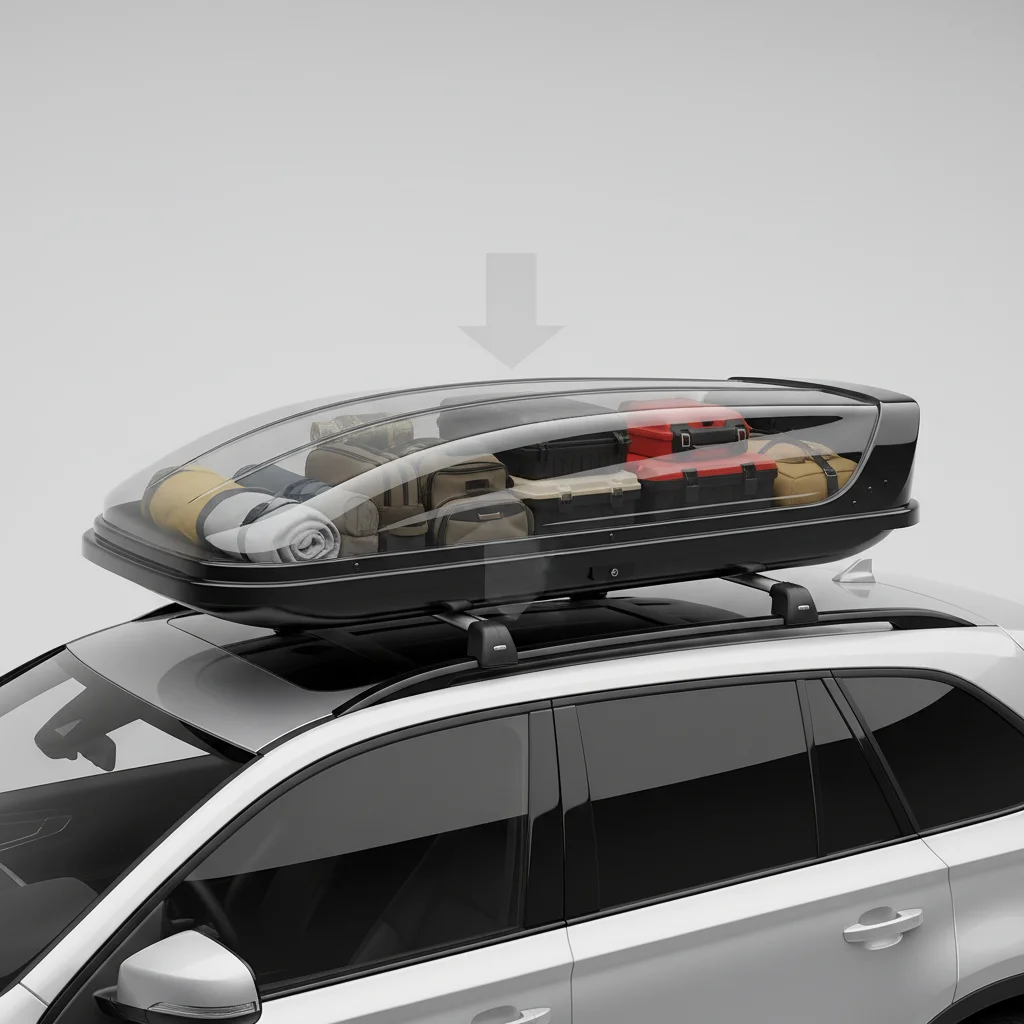
Proper roof box weight distribution is crucial for both vehicle handling and safety. Incorrect loading can lead to instability, increased fuel consumption, and even damage to your roof box or vehicle. The key is to place heavier items in the center of the box, directly over your vehicle’s roof bars, and lighter items towards the ends. This strategy minimizes sway and ensures a balanced load, making your journey safer and more comfortable.
Understanding Your Roof Box and Vehicle Weight Limits
Before loading, always consult your vehicle’s owner’s manual for the maximum dynamic roof load capacity. This figure includes the weight of the roof bars, the roof box itself, and its contents. Exceeding this limit can compromise your vehicle’s structural integrity and handling. Similarly, your roof box will have its own maximum load capacity, which should never be surpassed. Always use the lower of the two limits as your absolute maximum.
Strategic Loading for Stability and Safety
When loading, begin by placing your heaviest items in the central area of the roof box. These items should be positioned as low as possible and directly above the roof bars. Distribute the weight evenly from side to side to prevent your vehicle from leaning. Lighter, bulkier items can then fill the spaces towards the front and rear of the box. Avoid creating a ‘top-heavy’ load within the box itself, as this can shift during braking or cornering.
- Place heaviest items centrally, directly over roof bars.
- Distribute weight evenly from left to right.
- Fill remaining space with lighter, bulkier gear.
- Secure all items to prevent shifting during transit.
- Do not exceed either vehicle or roof box weight limits.
Securing Your Cargo Inside the Roof Box
|
Our Picks for the Best Roof Box in 2026
As an Amazon Associate I earn from qualifying purchases.
|
||
| Num | Product | Action |
|---|---|---|
| 1 | MeeFar Roof Rack Carrier Basket Universal Rooftop 51" X 36" X 5" + Waterproof Bag 15 Cubic Feet (44" 34" 17"), and Cargo Net with Attachment Hooks, Ratchet Straps |

|
| 2 | iBirdie Roof Rack Cargo Carrier 15.3 Cubic Feet, Soft-Shell Rooftop Cargo Box, Waterproof Heavy Duty 1200D for Car with/Without Roof Rack, Includes Anti-Slip Mat, Door Hooks, 46x34x17 inches |
|
| 3 | MIDABAO 20 Cubic Waterproof Duty Car Roof Top Carrier-Car Cargo Roof Top Bag, Waterproof & Coated Zippers includes Anti Slip Mat with or without Racks (20 Cubic Feet) |
|
| 4 | iBirdie Roof Rack Cargo Carrier 32.1 Cubic Feet, XXL Soft-Shell Rooftop Cargo Box, Waterproof Heavy Duty 1200D for Car with/Without Roof Rack, Includes Anti-Slip Mat, Door Hooks, 60x37x25 inches |
|
| 5 | Car Rooftop Cargo Carrier Bag, 21 Cubic Feet 100% Waterproof Heavy Duty 840D Car Roof Bag for All Vehicle with/Without Racks - Anti-Slip Mat, 6 Door Hooks, Storage Bags, 2 Extra Straps, Luggage Lock |
|
| 6 | Pelican Cargo Cases |
|
| 7 | Asinking Car Rooftop Cargo Carrier Bag - 100% Waterproof Heavy Duty Car Roof Luggage Carrier 21 Cubic Feet, Fits All Vehicles with/Without Roof Rack - Easy Install & Triply Reinforced for Secure Use |
|
| 8 | FIVKLEMNZ 21 Cubic Car Rooftop Cargo Carrier Roof Bag Waterproof for All Top of Vehicle with/Without Rack Includes Topper Anti-Slip Mat + Reinforced Straps + 6 Door Hooks + Luggage Lock |
|
| 9 | GarveeLife 46" x 36" Universal Roof Rack Cargo Carrier Basket, 200 Lbs Capacity Rooftop Cargo Rack, Car Top Luggage Holder Basket Heavy Duty for SUVs, Trucks, Vehicles |
|
| 10 | Sailnovo Rooftop Cargo Carrier Roof Bag, 20 Cubic feet Waterproof Roof Cargo Carrier fit car with/Without Luggage Rack - Vehicle Soft Shell Roof Cargo Box with Tie-Down Strap, Safety Hook |
|
Even with proper weight distribution, items can shift during travel if not secured. Many roof boxes come with internal straps or tie-down points. Utilize these to firmly secure your cargo, especially the heavier items. If your box lacks these features, consider using cargo nets or additional straps to prevent movement. Loose items can cause damage to the roof box interior and create unsettling noises while driving.
Impact on Driving Dynamics and Fuel Efficiency
A well-distributed load not only enhances safety but also improves driving dynamics. A balanced roof box reduces drag and minimizes the impact on your vehicle’s center of gravity, leading to better handling and reduced sway, especially at higher speeds or in windy conditions. Conversely, an improperly loaded box can significantly increase drag and negatively affect fuel efficiency. Always drive cautiously with a loaded roof box, anticipating longer braking distances and increased sensitivity to crosswinds.
Regular Checks and Maintenance
Before embarking on any long journey, and periodically during extended trips, it’s wise to check the security of your roof box and its contents. Ensure the mounting clamps are tight and that no items have shifted significantly. This proactive approach helps prevent potential issues and ensures your gear remains safe and secure throughout your adventure. Proper loading and regular checks are key to a hassle-free experience with your roof box.
Get our weekly buyer guide
Practical specs, not advice. Unsubscribe anytime.

I tried to follow the tips for weight distribution, putting the heavier stuff in the middle, but it’s still a bit tricky to get everything perfectly balanced in my Thule box. Maybe it’s just the shape of my particular box. It’s better than before, but not a total fix for the sway I sometimes feel.
The advice about checking both the vehicle’s and the roof box’s weight limits was super helpful. I always just assumed the box limit was the only one that mattered. It’s good to know how to avoid compromising my car’s handling, especially when I’m loaded up for a ski trip.
This really helped me understand why my fuel consumption was higher on some trips. I was definitely loading incorrectly, with too much weight at the ends. Now that I’m more mindful of distributing the load evenly over the roof bars, I’ve noticed a slight improvement in gas mileage and a much smoother ride.
I used to just throw everything in my roof box, but after reading about placing heavier items in the center, it’s made a huge difference. My car feels so much more stable on the highway, especially with all our camping gear. Definitely a game changer for long trips.