A whistling roof box is primarily an aerodynamic issue caused by air flowing around or through components, creating a resonant sound. The most common reasons include aerodynamic interference from non-streamlined roof racks, improper installation with loose components, open slots or gaps in crossbars, non-aerodynamic designs, and unsecured cargo or straps. Addressing these issues with quick fixes like installing a wind fairing or sealing gaps can restore peace to your travels and ensure gear remains secure.
What Causes Your Roof Box to Whistle?
A whistling roof box is primarily an aerodynamic issue, where air flowing around or through components creates a resonant sound. Several factors contribute to this unwelcome symphony.
Aerodynamic Interference and Airflow
The most common reason for whistling is simply the way air interacts with the roof box and roof rack system. Unlike the streamlined design of your vehicle, additional components on the roof disrupt smooth airflow, leading to turbulence and noise. This is especially true for roof racks with square or round crossbars, which are less aerodynamic than their wing-shaped counterparts. As air hits these non-aerodynamic shapes, it can vibrate the hollow metal, similar to how air vibrates through a flute, creating a whistle or hum.
Improper Installation and Loose Components
A properly installed roof rack and box should generally not whistle. However, if the roof box or the roof bars are not securely fastened, loose components can vibrate and generate noise. This includes bolts, screws, clamps, or even the box itself not being tightened to the manufacturer’s specifications. Incorrect orientation of aerodynamic bars can also lead to increased noise, as the trailing edge should face the rear of the car.
Open Slots, Gaps, and Channels
Many roof rack systems, particularly crossbars, have open slots or channels on their underside or top (like T-slots). If these channels are not sealed or covered, air can rush through them, producing a high-pitched whistle. Missing end caps on the crossbars also create openings where air can enter and cause noise. Similarly, gaps between the roof box and the crossbars, or even between rubber seals, can become sources of whistling.
Non-Aerodynamic Design
While some modern roof boxes and bars are designed with aerodynamics in mind to minimize wind resistance and noise, older models or those with a more utilitarian design can be more prone to whistling. Flat-profile bars, for example, tend to generate more wind noise than aerodynamic systems like Thule WingBars. An empty roof box might also generate more noise than a full one due to differing airflow characteristics.
Unsecured Cargo and Straps
|
Our Picks for the Best Roof Box in 2026
As an Amazon Associate I earn from qualifying purchases.
|
||
| Num | Product | Action |
|---|---|---|
| 1 | MeeFar Roof Rack Carrier Basket Universal Rooftop 51" X 36" X 5" + Waterproof Bag 15 Cubic Feet (44" 34" 17"), and Cargo Net with Attachment Hooks, Ratchet Straps |

|
| 2 | FIVKLEMNZ 21 Cubic Car Rooftop Cargo Carrier Roof Bag Waterproof for All Top of Vehicle with/Without Rack Includes Topper Anti-Slip Mat + Reinforced Straps + 6 Door Hooks + Luggage Lock |
|
| 3 | Pelican Cargo Cases |
|
| 4 | GarveeLife 46" x 36" Universal Roof Rack Cargo Carrier Basket, 200 Lbs Capacity Rooftop Cargo Rack, Car Top Luggage Holder Basket Heavy Duty for SUVs, Trucks, Vehicles |
|
| 5 | iBirdie Roof Rack Cargo Carrier 32.1 Cubic Feet, XXL Soft-Shell Rooftop Cargo Box, Waterproof Heavy Duty 1200D for Car with/Without Roof Rack, Includes Anti-Slip Mat, Door Hooks, 60x37x25 inches |
|
| 6 | MIDABAO 20 Cubic Waterproof Duty Car Roof Top Carrier-Car Cargo Roof Top Bag, Waterproof & Coated Zippers includes Anti Slip Mat with or without Racks (20 Cubic Feet) |
|
| 7 | Car Rooftop Cargo Carrier Bag, 21 Cubic Feet 100% Waterproof Heavy Duty 840D Car Roof Bag for All Vehicle with/Without Racks - Anti-Slip Mat, 6 Door Hooks, Storage Bags, 2 Extra Straps, Luggage Lock |
|
| 8 | Sailnovo Rooftop Cargo Carrier Roof Bag, 20 Cubic feet Waterproof Roof Cargo Carrier fit car with/Without Luggage Rack - Vehicle Soft Shell Roof Cargo Box with Tie-Down Strap, Safety Hook |
|
| 9 | Asinking Car Rooftop Cargo Carrier Bag - 100% Waterproof Heavy Duty Car Roof Luggage Carrier 21 Cubic Feet, Fits All Vehicles with/Without Roof Rack - Easy Install & Triply Reinforced for Secure Use |
|
| 10 | iBirdie Roof Rack Cargo Carrier 15.3 Cubic Feet, Soft-Shell Rooftop Cargo Box, Waterproof Heavy Duty 1200D for Car with/Without Roof Rack, Includes Anti-Slip Mat, Door Hooks, 46x34x17 inches |
|
It’s not always the roof box or rack itself; sometimes, the cargo inside or on the rack can be the culprit. Loose items within the box can shift and rattle, while unsecured straps can flap against the roof box or the vehicle, making considerable noise, especially at higher speeds. These impacts can sound like rocks hitting the vehicle, adding to the driving discomfort.
5 Quick Fixes for a Whistling Roof Box
Addressing a whistling roof box often involves simple adjustments and DIY solutions that can significantly reduce or eliminate the noise.
1. Install a Wind Fairing or Deflector
One of the most effective solutions for whistling roof racks and boxes is to install a wind fairing, also known as a wind deflector. This accessory attaches to the front crossbar and is designed to channel airflow away from the rack and box, significantly reducing wind noise and drag. Many specialized brands offer fairings compatible with various roof rack systems. For a DIY approach, some users have found success by wrapping bungee cord tightly around their bars in a spiral fashion or even taping sections of pool noodle to the bars, though these might add drag.
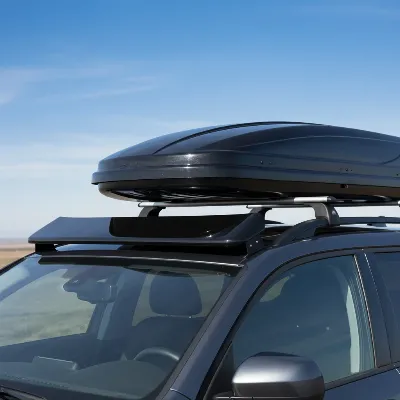 A car with a roof box and a black wind fairing installed on the front crossbar, reducing wind noise and improving aerodynamics.
2. Check and Seal All Gaps and Channels
Inspect your roof bars and roof box for any open slots, channels, or gaps. Many crossbars come with rubber or plastic strips designed to fill in the small slot on the underside or top of the bar; ensure these are all installed correctly and there are no missing sections. Missing end caps on the crossbars should be replaced, as these can create openings that amplify wind noise. If you find small gaps between components or seals, consider adding a soft gasket or tape to seal them off. Tyvek sheathing tape has been mentioned as an effective quick fix for blocking lateral gaps.
3. Ensure Proper Installation and Tighten All Components
A secure installation is fundamental to preventing noise. Recheck all bolts, screws, and clamps on your roof rack and roof box to ensure they are properly seated and tightened. Loose components are a primary source of vibration and rattling. Always follow the manufacturer’s instructions for installation. For wing-shaped roof bars, confirm they are fitted the correct way around, with the trailing edge facing the rear of the car, similar to an aircraft wing. If your roof box has a clamping mechanism, ensure it’s tightened until it “clicks” if it has that feature, indicating proper torque.
4. Adjust the Position of Your Roof Box and Load
The position of your roof box on the crossbars can significantly impact wind noise. Sometimes, simply moving the box forward or backward by a few inches can make a difference. Some users have found that scooting the box back towards the bumper reduced whistling. If your roof bars are fixed, you might still be able to slide your roof box along them. While further back often helps, it can be a process of trial and error to find the “sweet spot” for your specific vehicle and roof box. Also, consider the placement of items within your roof box; positioning larger, lower-profile items at the front can optimize airflow.
5. Secure All Cargo and Straps
Loose items inside the roof box can shift and cause noise or even damage. Use load straps or packing cubes to secure your gear, preventing movement during transit. When strapping down items on a roof rack, ensure all straps are tightly secured and any excess strap material is tied down or trimmed to prevent flapping. Flapping straps against the roof can create significant noise and distractions.
Preventing Future Whistling: Long-Term Solutions
While quick fixes can resolve immediate noise issues, considering long-term solutions will offer a quieter and more efficient driving experience.
Invest in Aerodynamic Roof Bars and Boxes
For those frequently using a roof box, investing in aerodynamic roof bars and boxes can be a major upgrade. These are designed with streamlined shapes that allow air to flow more smoothly over them, drastically reducing wind resistance and noise. Brands like Thule offer systems such as the WingBar Evo, Aeroblade Edge, and Motion XT boxes, specifically engineered for quiet performance. Although they might cost more initially, the improved driving comfort and potential fuel efficiency savings are worthwhile benefits.
> “The difference an aerodynamic roof bar makes is often underestimated. It’s not just about noise; it’s about reducing drag, which impacts fuel economy and overall driving comfort.” – Alex Johnson, Automotive Accessory Specialist
Regular Maintenance and Inspections
Make a habit of regularly inspecting your roof rack and roof box. Before each trip, check for any loose bolts, screws, or clamps, and ensure all rubber strips and end caps are in place and secure. Clean off any mud or debris that might affect the fit or aerodynamics. Over time, vibrations can affect the underside of your rack or cause friction against the vehicle’s roof, so routine checks can prevent minor issues from becoming major problems.
Consider Noise Reduction Strips
Some manufacturers offer specific noise reduction pads or strips designed to be placed between the roof rack and the vehicle’s roof or within the crossbar channels. These strips absorb vibrations and prevent air from whistling through open channels, contributing to a quieter ride. They are often easy to install and can provide robust sound reduction.
Conclusion
A whistling roof box can transform an enjoyable drive into an irritating experience, but it’s a problem with numerous practical solutions. From installing a simple wind fairing and sealing gaps to ensuring all components are tightly secured, these quick fixes can restore peace to your journeys. For long-term tranquility, consider investing in aerodynamic equipment and committing to regular maintenance. By addressing these issues, you not only eliminate annoying noise but also enhance the safety and efficiency of your roof box setup. So, next time you hear that unwelcome whistle, these tips and reclaim the quiet comfort of your ride.
What’s the most unusual fix you’ve tried for a noisy roof box, and did it work?
Frequently Asked Questions
Why does my roof box whistle only at high speeds?
Roof boxes typically whistle at higher speeds because increased wind resistance and airflow create more turbulence. At lower speeds, the air disturbance is minimal, but as speed increases, the wind force amplifies any aerodynamic imperfections, loose components, or unsealed gaps, leading to the whistling sound.
Can a whistling roof box affect fuel efficiency?
Yes, a whistling roof box indicates significant wind resistance and aerodynamic interference. This increased drag forces your vehicle’s engine to work harder, directly impacting fuel efficiency. Addressing the whistling can lead to a smoother, quieter ride and potentially improve your vehicle’s fuel economy.
Is it normal for all roof boxes to make some noise?
While it’s nearly impossible for any roof-mounted accessory to be entirely silent due to the disruption of natural airflow, excessive whistling or roaring is not normal. Aerodynamic roof bars and boxes are designed to minimize noise, but some minor wind noise might still be present, especially depending on vehicle shape and driving conditions.
Frequently Asked Questions
Why does my roof box whistle only at high speeds?
Roof boxes typically whistle at higher speeds because increased wind resistance and airflow create more turbulence. As speed increases, the wind force amplifies any aerodynamic imperfections, loose components, or unsealed gaps, leading to the whistling sound, which is minimal at lower speeds.
Can a whistling roof box affect fuel efficiency?
Yes, a whistling roof box indicates significant wind resistance and aerodynamic interference. This increased drag forces your vehicle's engine to work harder, directly impacting fuel efficiency. Addressing the whistling can lead to a smoother, quieter ride and potentially improve your vehicle's fuel economy by several percentage points.
Is it normal for all roof boxes to make some noise?
While it's nearly impossible for any roof-mounted accessory to be entirely silent due to the disruption of natural airflow, excessive whistling or roaring is not normal. Aerodynamic roof bars and boxes are designed to minimize noise, but some minor wind noise might still be present, especially depending on vehicle shape and driving conditions.
What is a wind fairing and how does it stop whistling?
A wind fairing, or wind deflector, is an accessory that attaches to the front crossbar of your roof rack. It works by channeling airflow away from the rack and roof box, significantly reducing wind noise and drag. This creates a smoother aerodynamic profile, preventing the turbulent air that causes whistling.
How often should I inspect my roof box for noise issues?
You should make a habit of regularly inspecting your roof rack and roof box before each trip. Check for any loose bolts, screws, or clamps, and ensure all rubber strips and end caps are in place and secure. Routine checks prevent minor issues from becoming major problems and maintain optimal performance.
Get our weekly buyer guide
Practical specs, not advice. Unsubscribe anytime.

I was about to lose my mind with the constant whistling from my Thule box on long trips. The tip about checking for open slots in the crossbars was a game-changer. I sealed them up with some electrical tape for a quick fix, and the difference is night and day. So much quieter now, even at highway speeds. Highly recommend checking those gaps!
This was super helpful! I realized my cargo straps inside the box were flapping around, creating a weird hum that I mistook for whistling. Securing everything tightly inside made all the difference. It’s amazing how a small detail like unsecured cargo can cause such a racket. My drives are peaceful again.
I tried the wind fairing suggestion for my older, more boxy roof box, and while it did help a little, the whistling isn’t completely gone. It’s definitely less intense, but I was hoping for total silence. Maybe my box design is just too non-aerodynamic. Still, it’s better than before, so I’ll keep it on.
My Yakima box started whistling like crazy after I reinstalled it. I thought I had everything tight, but it turns out I hadn’t properly secured the mounting clamps. Once I went back and double-checked all the connections, the noise significantly reduced. It’s still not perfectly silent, but it’s a huge improvement and much less distracting on family road trips.