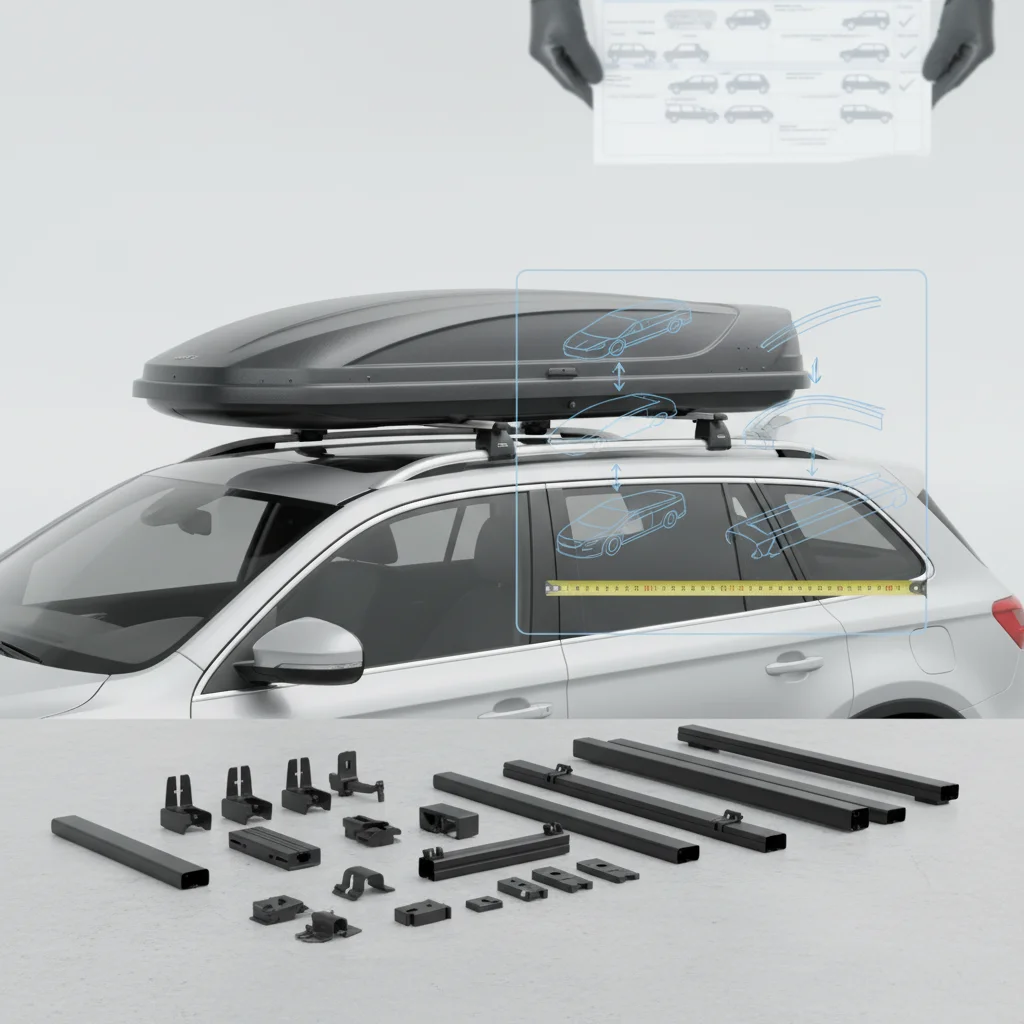
Determining roof box compatibility with your vehicle involves checking several key factors to ensure a secure and safe fit. The most crucial aspects are your car’s roof rack system, the box’s dimensions, and the weight capacity of both your roof and the box itself. There are typically five main compatibility checks you should perform before purchasing a roof box.
Understanding Your Vehicle’s Roof Rack System
The foundation of roof box compatibility lies in your vehicle’s roof rack. Most modern vehicles come with either integrated flush rails, raised rails, fixed points, or naked roofs that require a specific base rack system. Flush rails are sleek and run along the length of the roof, while raised rails offer a gap between the rail and the roof. Fixed points are designated attachment points often hidden under small covers. Naked roofs require a complete aftermarket base rack system, including towers, fit kits, and crossbars. Ensure your roof box is designed to mount to your specific type of crossbars, whether they are square, aero, or round. For expert automotive roof reviews on this site.
Measuring for Proper Roof Box Dimensions
Once you’ve identified your roof rack type, the next step is to measure your vehicle’s roof to ensure the roof box will fit without obstructing your trunk or antenna. Measure the distance from the front crossbar to the rear of your roof, paying attention to the clearance needed for your tailgate to open fully. Also, consider the width of your roof and the potential for overhang. A common mistake is selecting a box that is too long, preventing the rear hatch from opening. Most manufacturers provide detailed dimensions for their roof boxes, so compare these carefully with your vehicle’s measurements.
- Check crossbar spread compatibility.
- Verify tailgate clearance.
- Ensure antenna clearance.
- Consider overall vehicle height with the box.
- Confirm box mounting hardware fits crossbar profile.
Weight Capacity and Distribution Considerations
|
Our Picks for the Best Roof Box in 2026
As an Amazon Associate I earn from qualifying purchases.
|
||
| Num | Product | Action |
|---|---|---|
| 1 | Sailnovo Rooftop Cargo Carrier Roof Bag, 20 Cubic feet Waterproof Roof Cargo Carrier fit car with/Without Luggage Rack - Vehicle Soft Shell Roof Cargo Box with Tie-Down Strap, Safety Hook |

|
| 2 | Asinking Car Rooftop Cargo Carrier Bag - 100% Waterproof Heavy Duty Car Roof Luggage Carrier 21 Cubic Feet, Fits All Vehicles with/Without Roof Rack - Easy Install & Triply Reinforced for Secure Use |
|
| 3 | Car Rooftop Cargo Carrier Bag, 21 Cubic Feet 100% Waterproof Heavy Duty 840D Car Roof Bag for All Vehicle with/Without Racks - Anti-Slip Mat, 6 Door Hooks, Storage Bags, 2 Extra Straps, Luggage Lock |
|
| 4 | iBirdie Roof Rack Cargo Carrier 15.3 Cubic Feet, Soft-Shell Rooftop Cargo Box, Waterproof Heavy Duty 1200D for Car with/Without Roof Rack, Includes Anti-Slip Mat, Door Hooks, 46x34x17 inches |
|
| 5 | Pelican Cargo Cases |
|
| 6 | FIVKLEMNZ 21 Cubic Car Rooftop Cargo Carrier Roof Bag Waterproof for All Top of Vehicle with/Without Rack Includes Topper Anti-Slip Mat + Reinforced Straps + 6 Door Hooks + Luggage Lock |
|
| 7 | GarveeLife 46" x 36" Universal Roof Rack Cargo Carrier Basket, 200 Lbs Capacity Rooftop Cargo Rack, Car Top Luggage Holder Basket Heavy Duty for SUVs, Trucks, Vehicles |
|
| 8 | MIDABAO 20 Cubic Waterproof Duty Car Roof Top Carrier-Car Cargo Roof Top Bag, Waterproof & Coated Zippers includes Anti Slip Mat with or without Racks (20 Cubic Feet) |
|
| 9 | iBirdie Roof Rack Cargo Carrier 32.1 Cubic Feet, XXL Soft-Shell Rooftop Cargo Box, Waterproof Heavy Duty 1200D for Car with/Without Roof Rack, Includes Anti-Slip Mat, Door Hooks, 60x37x25 inches |
|
| 10 | MeeFar Roof Rack Carrier Basket Universal Rooftop 51" X 36" X 5" + Waterproof Bag 15 Cubic Feet (44" 34" 17"), and Cargo Net with Attachment Hooks, Ratchet Straps |
|
Every vehicle has a maximum dynamic roof load capacity, which is the total weight your roof can safely carry while the vehicle is in motion. This includes the weight of the roof rack system, the roof box itself, and its contents. Exceeding this limit can compromise vehicle handling and safety. Similarly, roof boxes have their own weight limits. Always adhere to the lower of the two limits. Proper weight distribution within the roof box is also vital; heavier items should be placed in the center and secured to prevent shifting during travel.
Mounting System and Ease of Installation
Roof boxes come with various mounting systems, from U-bolts to quick-clamp mechanisms. Modern quick-clamp systems are generally easier and faster to install, often requiring no tools. Ensure the mounting system is compatible with the width and thickness of your crossbars. Some boxes offer adjustable mounting points, which can be beneficial for vehicles with specific crossbar spreads. Always follow the manufacturer’s installation instructions precisely to ensure a secure attachment and prevent damage to your vehicle or the roof box.
Aerodynamics and Fuel Efficiency Impact
While not strictly a compatibility issue, the aerodynamic design of a roof box can significantly impact your vehicle’s fuel efficiency and wind noise. Low-profile, sleekly designed roof boxes tend to create less drag and noise compared to bulkier, boxier models. Consider how the roof box will affect your driving experience, especially on long journeys. Some roof boxes are specifically engineered to minimize air resistance, which can be a worthwhile investment if fuel economy is a primary concern for you.
Final Checks and Test Drive
After installing your roof box, perform a thorough final check. Tug on the box to ensure it’s securely fastened to the crossbars. Drive a short distance at varying speeds, listening for any unusual noises or vibrations. Re-check the mounting hardware after your initial drive to confirm everything remains tight. This proactive approach helps identify and rectify any potential issues before embarking on a longer trip, ensuring peace of mind and safety for your gear and vehicle.
Get our weekly buyer guide
Practical specs, not advice. Unsubscribe anytime.

I was so confused about whether a roof box would even work with my car’s flush rails. This really helped me understand that I needed specific clamps and not just any universal one. We ended up getting a Thule box and it fits perfectly, giving us so much extra space for our camping gear. Definitely a game-changer for family trips!
This was exactly what I needed before buying our first roof box. The five main compatibility checks were laid out so clearly. We have a naked roof and were worried about the whole aftermarket system, but now I feel confident in choosing the right one. No more cramming everything into the trunk for road trips!
I appreciated the breakdown of different roof rack systems, especially the part about fixed points. My SUV has those and it was tricky figuring out what kind of base rack to get. My only complaint is that it didn’t really go into specific brands for those systems, which would have saved me some extra research time. Still, it pointed me in the right direction.
The section on checking the weight capacity was super helpful. I almost bought a huge box without realizing my car’s roof had a lower limit than I thought. It made me rethink my options and go for a slightly smaller, lighter model. It’s still plenty big for our skis and boots, and I feel much safer knowing we’re not overloading anything.