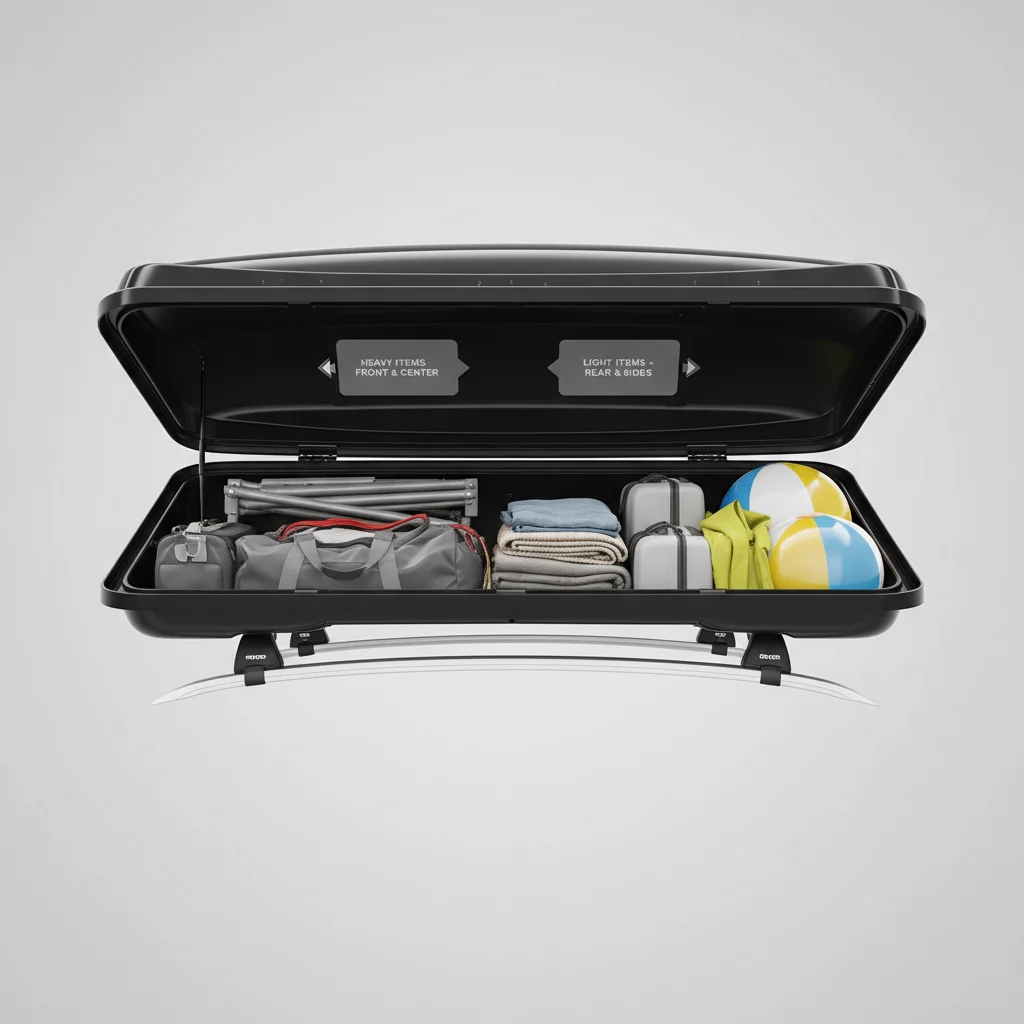
Proper roof box weight distribution is crucial for both vehicle stability and fuel efficiency. An unevenly loaded roof box can significantly impact your car’s handling, especially at higher speeds or during turns, leading to a less safe and less comfortable driving experience. By following a few key principles, you can ensure your cargo is distributed optimally, enhancing safety and performance on the road.
Understanding Your Vehicle’s Roof Load Limit
Before you even begin packing, it’s essential to know your vehicle’s maximum roof load limit. This information is typically found in your car’s owner’s manual. Exceeding this limit can damage your vehicle’s roof, compromise handling, and even lead to dangerous situations. Remember that the roof load limit includes the weight of the roof rack, the roof box itself, and all the cargo inside. Always err on the side of caution and stay well within the recommended limits.
The Principle of Centralized Weight
The most fundamental rule for roof box weight distribution is to place the heaviest items in the center of the box, directly over your vehicle’s roof crossbars. This central placement minimizes leverage effects and reduces the strain on the roof rack system. Lighter items can then be packed around the heavier core, filling in gaps and providing cushioning. Avoid placing heavy items at the very front or back of the box, as this can create a pendulum effect, especially during braking or acceleration.
Balancing Side-to-Side and Front-to-Back
|
Our Picks for the Best Roof Box in 2026
As an Amazon Associate I earn from qualifying purchases.
|
||
| Num | Product | Action |
|---|---|---|
| 1 | FIVKLEMNZ 21 Cubic Car Rooftop Cargo Carrier Roof Bag Waterproof for All Top of Vehicle with/Without Rack Includes Topper Anti-Slip Mat + Reinforced Straps + 6 Door Hooks + Luggage Lock |

|
| 2 | Asinking Car Rooftop Cargo Carrier Bag - 100% Waterproof Heavy Duty Car Roof Luggage Carrier 21 Cubic Feet, Fits All Vehicles with/Without Roof Rack - Easy Install & Triply Reinforced for Secure Use |
|
| 3 | Pelican Cargo Cases |
|
| 4 | MeeFar Roof Rack Carrier Basket Universal Rooftop 51" X 36" X 5" + Waterproof Bag 15 Cubic Feet (44" 34" 17"), and Cargo Net with Attachment Hooks, Ratchet Straps |
|
| 5 | Sailnovo Rooftop Cargo Carrier Roof Bag, 20 Cubic feet Waterproof Roof Cargo Carrier fit car with/Without Luggage Rack - Vehicle Soft Shell Roof Cargo Box with Tie-Down Strap, Safety Hook |
|
| 6 | Car Rooftop Cargo Carrier Bag, 21 Cubic Feet 100% Waterproof Heavy Duty 840D Car Roof Bag for All Vehicle with/Without Racks - Anti-Slip Mat, 6 Door Hooks, Storage Bags, 2 Extra Straps, Luggage Lock |
|
| 7 | iBirdie Roof Rack Cargo Carrier 15.3 Cubic Feet, Soft-Shell Rooftop Cargo Box, Waterproof Heavy Duty 1200D for Car with/Without Roof Rack, Includes Anti-Slip Mat, Door Hooks, 46x34x17 inches |
|
| 8 | MIDABAO 20 Cubic Waterproof Duty Car Roof Top Carrier-Car Cargo Roof Top Bag, Waterproof & Coated Zippers includes Anti Slip Mat with or without Racks (20 Cubic Feet) |
|
| 9 | iBirdie Roof Rack Cargo Carrier 32.1 Cubic Feet, XXL Soft-Shell Rooftop Cargo Box, Waterproof Heavy Duty 1200D for Car with/Without Roof Rack, Includes Anti-Slip Mat, Door Hooks, 60x37x25 inches |
|
| 10 | GarveeLife 46" x 36" Universal Roof Rack Cargo Carrier Basket, 200 Lbs Capacity Rooftop Cargo Rack, Car Top Luggage Holder Basket Heavy Duty for SUVs, Trucks, Vehicles |
|
Beyond centralizing the heaviest items, it’s equally important to balance the weight from side to side and front to back. Imagine an invisible line running down the middle of your roof box; the weight on either side of this line should be roughly equal. Similarly, distribute the weight evenly along the length of the box. This prevents your vehicle from leaning to one side or experiencing excessive nose-dive or tail-squat during driving. Use smaller, lighter items to fill in any remaining voids and prevent shifting.
- Place heaviest items directly over roof crossbars.
- Distribute weight evenly from left to right.
- Balance weight along the length of the box.
- Use soft items to fill gaps and prevent movement.
- Secure all items with internal straps if available.
Securing Your Cargo Inside the Box
Even with perfect weight distribution, unsecured items can shift during transit, negating your efforts and potentially causing damage. Many roof boxes come with internal straps or tie-down points. Utilize these to firmly secure your cargo. If your box lacks internal straps, consider using cargo nets or bungee cords to keep items from moving around. For delicate items, wrap them in blankets or towels to prevent rattling and impact damage. A well-secured load is a safe load.
Achieving optimal roof box weight distribution is a simple yet critical step for any road trip. By understanding your limits, centralizing heavy items, balancing the load, and securing everything properly, you’ll enjoy a safer and more efficient journey. For those looking for a new roof box that offers excellent internal securing options, consider checking out thewhich features multiple tie-down points. Additionally, if you’re in need of robust internal cargo organizers to further enhance your packing strategy, theprovides a great solution for keeping everything in its place.
Get our weekly buyer guide
Practical specs, not advice. Unsubscribe anytime.

This was super helpful for understanding how to pack my Yakima SkyBox. I always worried about exceeding my vehicle’s roof load limit, but the tips here made it clear how to calculate everything. My only minor complaint is that it didn’t mention specific examples for different types of gear, like skis versus camping equipment. Still, great advice overall.
The information about keeping heavier items centered was good, and I tried it with my SportRack box. I did notice a slight improvement in stability, but I still felt a bit of sway at higher speeds. Maybe my car’s suspension just isn’t built for it, or I need to practice my packing technique more. It’s a good starting point though.
I never really thought about how much an unevenly loaded roof box could affect handling until I had a sketchy moment on a windy road. Following the advice to put heavier items in the middle and lighter ones towards the ends has made a noticeable improvement. My Subaru Outback feels much more planted now, even with a full cargo carrier.
I used to just throw everything into my Thule box, but after reading about proper roof box weight distribution, I tried to be more strategic. It really made a difference on our last road trip. The car felt much more stable on the highway, even with a full box. Definitely worth taking the extra few minutes to pack correctly.