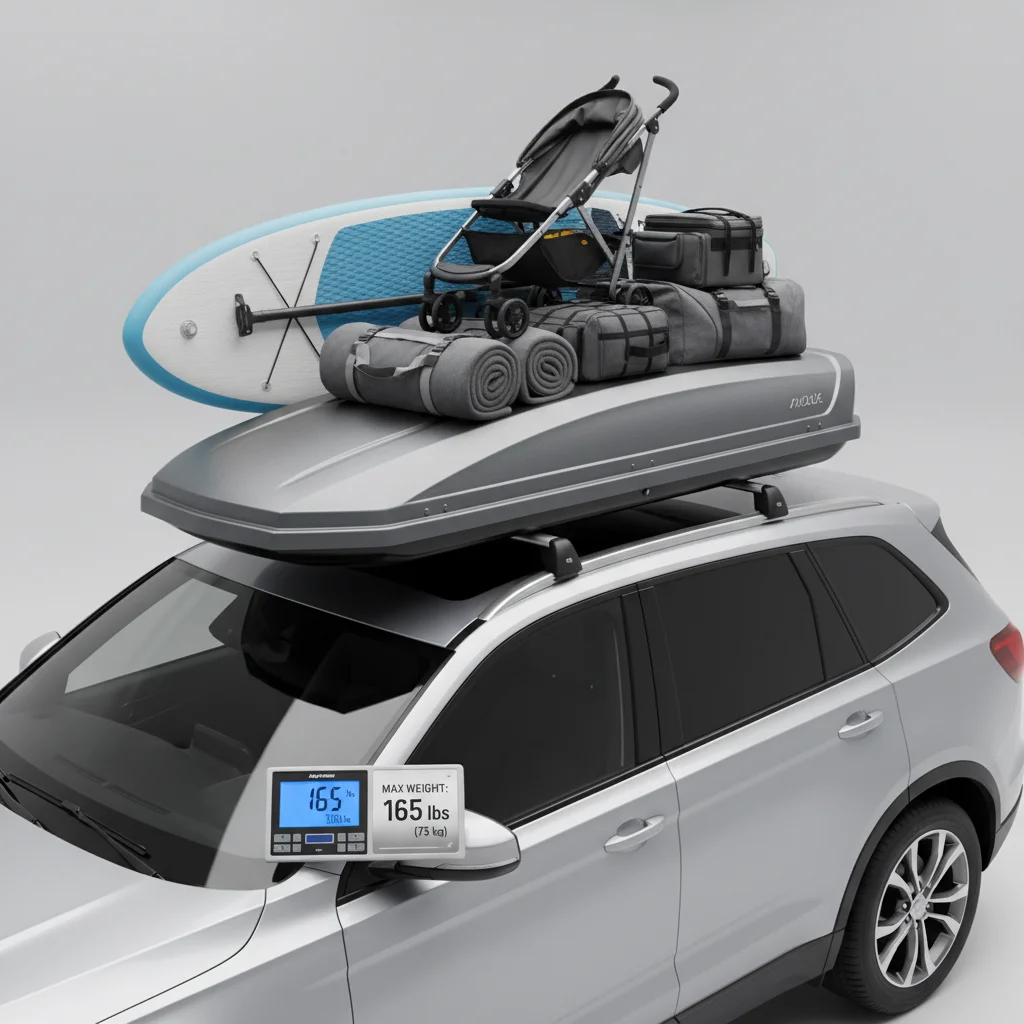
Understanding roof box weight limits is crucial for safe travel, and generally, most roof boxes can safely carry between 110 to 165 pounds (50 to 75 kg) of gear. This limit is determined by several factors, including the roof box’s construction, the vehicle’s roof load capacity, and the type of roof rack used. Exceeding these limits can compromise vehicle handling, fuel efficiency, and even lead to structural damage to your roof box or car.
Understanding Your Vehicle’s Roof Load Capacity
Every vehicle has a specified maximum roof load capacity, which can typically be found in your owner’s manual. This figure includes the weight of the roof rack, the roof box itself, and its contents. It’s vital not to confuse the roof box’s internal capacity with your vehicle’s overall limit. For instance, a roof box might be designed to hold 165 pounds, but if your car’s roof capacity is only 150 pounds, you must adhere to the lower vehicle limit. Always prioritize the vehicle’s manufacturer recommendations to ensure safety and prevent potential damage.
Factors Influencing Roof Box Weight Limits
Several elements contribute to the overall weight limit you can safely carry. The material and design of the roof box play a significant role; more robust boxes made from durable ABS plastic or fiberglass often have higher internal weight ratings. The type of roof rack also matters. Crossbars with a higher dynamic load rating will support more weight than those with a lower rating. The distribution of weight within the roof box is important. Heavy items should be placed centrally and low down to maintain a balanced center of gravity, reducing sway and improving vehicle stability.
Calculating Total Load and Safe Packing Tips
|
Our Picks for the Best Roof Box in 2026
As an Amazon Associate I earn from qualifying purchases.
|
||
| Num | Product | Action |
|---|---|---|
| 1 | Asinking Car Rooftop Cargo Carrier Bag - 100% Waterproof Heavy Duty Car Roof Luggage Carrier 21 Cubic Feet, Fits All Vehicles with/Without Roof Rack - Easy Install & Triply Reinforced for Secure Use |

|
| 2 | FIVKLEMNZ 21 Cubic Car Rooftop Cargo Carrier Roof Bag Waterproof for All Top of Vehicle with/Without Rack Includes Topper Anti-Slip Mat + Reinforced Straps + 6 Door Hooks + Luggage Lock |
|
| 3 | Car Rooftop Cargo Carrier Bag, 21 Cubic Feet 100% Waterproof Heavy Duty 840D Car Roof Bag for All Vehicle with/Without Racks - Anti-Slip Mat, 6 Door Hooks, Storage Bags, 2 Extra Straps, Luggage Lock |
|
| 4 | MeeFar Roof Rack Carrier Basket Universal Rooftop 51" X 36" X 5" + Waterproof Bag 15 Cubic Feet (44" 34" 17"), and Cargo Net with Attachment Hooks, Ratchet Straps |
|
| 5 | iBirdie Roof Rack Cargo Carrier 15.3 Cubic Feet, Soft-Shell Rooftop Cargo Box, Waterproof Heavy Duty 1200D for Car with/Without Roof Rack, Includes Anti-Slip Mat, Door Hooks, 46x34x17 inches |
|
| 6 | iBirdie Roof Rack Cargo Carrier 32.1 Cubic Feet, XXL Soft-Shell Rooftop Cargo Box, Waterproof Heavy Duty 1200D for Car with/Without Roof Rack, Includes Anti-Slip Mat, Door Hooks, 60x37x25 inches |
|
| 7 | Sailnovo Rooftop Cargo Carrier Roof Bag, 20 Cubic feet Waterproof Roof Cargo Carrier fit car with/Without Luggage Rack - Vehicle Soft Shell Roof Cargo Box with Tie-Down Strap, Safety Hook |
|
| 8 | Pelican Cargo Cases |
|
| 9 | MIDABAO 20 Cubic Waterproof Duty Car Roof Top Carrier-Car Cargo Roof Top Bag, Waterproof & Coated Zippers includes Anti Slip Mat with or without Racks (20 Cubic Feet) |
|
| 10 | GarveeLife 46" x 36" Universal Roof Rack Cargo Carrier Basket, 200 Lbs Capacity Rooftop Cargo Rack, Car Top Luggage Holder Basket Heavy Duty for SUVs, Trucks, Vehicles |
|
To calculate your total load, add the weight of your roof rack, the empty roof box, and all the items you plan to pack inside. Ensure this sum does not exceed your vehicle’s maximum roof load capacity. When packing, distribute weight evenly and secure items to prevent shifting during transit. Use soft bags or blankets to fill empty spaces and prevent items from rattling around. Overloading the roof box, even if it’s within the vehicle’s limit, can still negatively impact handling, especially when cornering or braking.
- Always check your vehicle’s owner’s manual for roof load capacity.
- Distribute weight evenly within the roof box, placing heavier items in the center.
- Secure all contents to prevent movement during travel.
- Consider the combined weight of the roof rack, empty box, and contents.
- Avoid packing liquids or extremely fragile items that could shift or break.
Consequences of Exceeding Weight Limits
Exceeding the recommended weight limits can lead to a range of serious issues. At best, you might experience reduced fuel efficiency and compromised vehicle handling, making your car harder to control, especially at higher speeds or in windy conditions. At worst, an overloaded roof box can cause structural damage to your roof rack, the roof of your car, or even lead to the roof box detaching from the vehicle, posing a significant hazard to yourself and other road users. Always err on the side of caution and stay well within the specified limits.Properly understanding and adhering to roof box weight limits is not just about protecting your gear; it’s about ensuring the safety of everyone on the road. By following these guidelines, you can enjoy your travels with peace of mind, knowing your equipment is securely and safely transported. Always double-check your load before embarking on any journey, especially longer trips or those involving varied terrain.
Get our weekly buyer guide
Practical specs, not advice. Unsubscribe anytime.
