An extra-large roof box for minivans typically offers a capacity of 18 to 25+ cubic feet (510 to over 700 liters), significantly expanding cargo space for family road trips, camping, or sports expeditions. These boxes are essential for keeping the minivan’s interior clear for passengers and ensuring a more comfortable journey. Key considerations for selection include material (ABS plastic vs. fiberglass), aerodynamic design, and compatibility with your minivan’s roof rack system and load capacity.
What is a Roof Box? Why Do You Need One?
A roof box, also known as a cargo box or rooftop carrier, is a secure, weather-resistant container mounted on your vehicle’s roof rack system. Its primary purpose is to significantly expand your car’s cargo capacity, allowing you to transport bulky or extra items that wouldn’t fit comfortably, or safely, inside your vehicle. For minivan owners, these accessories are particularly beneficial, serving as an external trunk that keeps the interior clear for passengers and essentials.
Imagine packing for a week-long family vacation: multiple suitcases, a cooler, beach gear, and maybe even a dog. Without a roof box, your minivan’s cabin quickly becomes a jumbled mess, compromising passenger comfort and visibility. A roof box provides dedicated space for all these items, protecting them from the elements and theft. This added convenience is invaluable for families, outdoor enthusiasts hauling sports equipment like skis or fishing rods, and anyone needing extra room for camping gear. By optimizing your storage, a roof box helps you avoid clutter, potential interior damage, and the need for multiple trips, making every journey smoother and more enjoyable. For expert automotive roof reviews on this site.
Popular Types of Roof Boxes for Minivans
When exploring extra-large roof boxes for your minivan, you’ll encounter a variety of options, primarily differentiated by their construction materials, dimensions, and design features. Understanding these distinctions is crucial for selecting a model that perfectly aligns with your travel needs and vehicle specifications.
Roof Box Materials: ABS Plastic vs. Fiberglass
The two dominant materials used in roof box manufacturing are ABS plastic and fiberglass, each offering distinct advantages and drawbacks.
- ABS Plastic: Acrylonitrile Butadiene Styrene (ABS) plastic is a popular choice due to its excellent balance of properties. It is generally lighter than fiberglass, making installation and removal easier, and contributing less to your vehicle’s overall weight. ABS is also known for its impact resistance; it tends to flex and return to its original shape rather than shattering, which can be beneficial on rough roads. Manufacturers can easily mold ABS into highly aerodynamic shapes, aiding fuel efficiency and reducing wind noise. ABS is often considered more environmentally friendly as it is a thermoplastic and can be recycled. However, ABS plastic can become stiff and more brittle in extremely cold temperatures, potentially making it prone to cracking.
- Fiberglass: Fiberglass roof boxes, made from glass fibers embedded in a plastic matrix, are renowned for their superior robustness and durability. They often boast higher crash safety ratings and can typically handle a greater maximum load capacity—some models are rated to carry up to 165 pounds, provided your vehicle’s roof can support it. While fiberglass offers exceptional strength, it is generally heavier than ABS, which can impact fuel economy and make handling more challenging. Although robust, some fiberglass compositions can be less resistant to shattering on direct, sharp impact compared to certain polycarbonate plastics. Without proper UV inhibitors, fiberglass can also deteriorate under prolonged sun exposure, potentially developing a yellow hue over time. The manufacturing process for fiberglass is also typically more resource-intensive.
 A modern minivan with an extra-large, sleek roof box mounted on its roof rack, parked against a scenic outdoor backdrop at sunset.
Roof Box Sizes and Capacities for Minivans
|
Our Picks for the Best Roof Box in 2026
As an Amazon Associate I earn from qualifying purchases.
|
||
| Num | Product | Action |
|---|---|---|
| 1 | MIDABAO 20 Cubic Waterproof Duty Car Roof Top Carrier-Car Cargo Roof Top Bag, Waterproof & Coated Zippers includes Anti Slip Mat with or without Racks (20 Cubic Feet) |

|
| 2 | iBirdie Roof Rack Cargo Carrier 32.1 Cubic Feet, XXL Soft-Shell Rooftop Cargo Box, Waterproof Heavy Duty 1200D for Car with/Without Roof Rack, Includes Anti-Slip Mat, Door Hooks, 60x37x25 inches |
|
| 3 | MeeFar Roof Rack Carrier Basket Universal Rooftop 51" X 36" X 5" + Waterproof Bag 15 Cubic Feet (44" 34" 17"), and Cargo Net with Attachment Hooks, Ratchet Straps |
|
| 4 | GarveeLife 46" x 36" Universal Roof Rack Cargo Carrier Basket, 200 Lbs Capacity Rooftop Cargo Rack, Car Top Luggage Holder Basket Heavy Duty for SUVs, Trucks, Vehicles |
|
| 5 | iBirdie Roof Rack Cargo Carrier 15.3 Cubic Feet, Soft-Shell Rooftop Cargo Box, Waterproof Heavy Duty 1200D for Car with/Without Roof Rack, Includes Anti-Slip Mat, Door Hooks, 46x34x17 inches |
|
| 6 | Pelican Cargo Cases |
|
| 7 | Sailnovo Rooftop Cargo Carrier Roof Bag, 20 Cubic feet Waterproof Roof Cargo Carrier fit car with/Without Luggage Rack - Vehicle Soft Shell Roof Cargo Box with Tie-Down Strap, Safety Hook |
|
| 8 | Asinking Car Rooftop Cargo Carrier Bag - 100% Waterproof Heavy Duty Car Roof Luggage Carrier 21 Cubic Feet, Fits All Vehicles with/Without Roof Rack - Easy Install & Triply Reinforced for Secure Use |
|
| 9 | FIVKLEMNZ 21 Cubic Car Rooftop Cargo Carrier Roof Bag Waterproof for All Top of Vehicle with/Without Rack Includes Topper Anti-Slip Mat + Reinforced Straps + 6 Door Hooks + Luggage Lock |
|
| 10 | Car Rooftop Cargo Carrier Bag, 21 Cubic Feet 100% Waterproof Heavy Duty 840D Car Roof Bag for All Vehicle with/Without Racks - Anti-Slip Mat, 6 Door Hooks, Storage Bags, 2 Extra Straps, Luggage Lock |
|
For minivan owners, “extra-large” generally refers to roof boxes with capacities ranging from approximately 18 to 25+ cubic feet (equivalent to about 510 to over 700 liters). This expansive volume is perfect for accommodating multiple large suitcases, several sets of skis, camping tents, or a mix of various outdoor gear.
When selecting a size, it’s vital to consider not only the volume but also the external dimensions of the box. An extra-large roof box should complement your minivan’s length without obstructing the rear tailgate when opened or significantly overhanging the front windshield. Common dimensions for such boxes might be around 80-90 inches in length, 30-45 inches in width, and 14-18 inches in height. Always check your vehicle’s owner’s manual for specific guidelines regarding roof rack compatibility and maximum recommended dimensions. Additionally, the added height of an extra-large box will affect your vehicle’s overall clearance, a crucial factor for garages, carports, and drive-thrus.
Roof Box Styles and Aerodynamic Designs
The shape and design of a roof box play a critical role in its performance, impacting everything from fuel efficiency to cabin noise. Modern extra-large roof boxes for minivans often feature sophisticated, aerodynamic designs aimed at minimizing wind resistance and drag.
Look for boxes with a low-profile and tapered front, similar to an airplane wing or a teardrop shape. These designs allow air to flow smoothly over and around the box, significantly reducing turbulence, wind noise, and the drag that can negatively affect your minivan’s fuel economy. Features like dual-sided opening are premium conveniences, allowing easy access to your gear from either side of the vehicle, which is particularly useful in tight parking spots or on busy roadsides. Many advanced models also incorporate quick-mount installation systems that allow for tool-free attachment and removal in minutes, along with integrated locking mechanisms and gas-assist struts to hold the lid open for hassle-free loading and unloading.
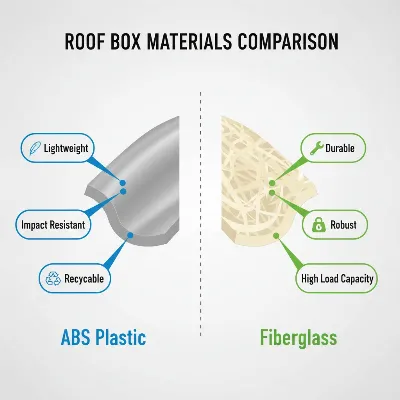 An illustrative comparison of ABS plastic and fiberglass materials in a roof box context, highlighting their properties.
Comparison Table: Top Extra Large Roof Boxes for Minivans in 2026
Choosing an extra-large roof box for your minivan means balancing capacity with features, durability, and ease of use. Below is a comparison of some of the leading models known for their suitability for minivans in 2026, based on their capacity, design, and key features.
| Model | Capacity (cu ft/L) | Key Features | Material | Noted Advantages & Considerations |
|---|---|---|---|---|
| Thule Motion 3 XL Low | 16-21 cu ft | Dual-sided opening, PowerClick quick-mount system, SlideLock, low-profile design, integrated light (on some versions) | ABS Plastic | A top-tier all-rounder, celebrated for its sleek, aerodynamic profile that minimizes drag and noise. The low-profile is great for clearance. User-friendly installation and secure locking. Offers a good balance of size and efficiency. Excellent for skis and snowboards. |
| Yakima SkyBox NX XL | 18 cu ft | Dual-side opening, SKS (Same Key System) locks, low-profile design, integrated hinged “lobster claw” clamps, nearly flat interior floor | ABS Plastic | Known for its user-friendly installation with integrated clamps and a torque knob for secure fit. The low-profile design helps with aerodynamics and garage clearance. Good capacity for varied gear and excellent security. |
| Packasport Trailblazer | 25 cu ft | Largest capacity available in the US market, marine-grade fiberglass construction, strut system to hold lid open, custom color options | Fiberglass | Offers truly massive storage for those who need maximum space. Its marine-grade fiberglass construction ensures high durability and scratch resistance. Ideal for extensive family trips or bulky equipment. Comes with premium price point and heavier weight. |
| Farad Marlin N7 | 24 cu ft (680L) | Huge capacity, sleek modern design, double-sided opening, central locking, UV-protected material | ABS Plastic | A very large capacity option with a stylish, robust design. Provides ample space for large family holidays and adventures. Good blend of aesthetics and functionality. |
Buying Guide: How to Choose the Right Extra Large Roof Box for Your Minivan
Selecting the perfect extra-large roof box for your minivan requires careful consideration to ensure it meets your specific needs, fits your vehicle correctly, and offers lasting value. Here’s a comprehensive guide to help you make an informed choice.
1. Assess Your Minivan’s Needs and Compatibility
Before anything else, define what you intend to carry and how often. Are you a family of five needing space for extra luggage, or an outdoor enthusiast transporting bulky camping gear or multiple sets of skis? This will dictate the required volume and shape. Crucially, your minivan must have a compatible roof rack system (crossbars and side rails). Check your vehicle’s owner’s manual for its maximum roof load capacity, usually between 150-200 lbs, and the permissible crossbar spread. The weight of the roof box itself, your roof rack, and all the cargo combined must not exceed this limit.
2. Prioritize Capacity and Dimensions
For a minivan, an “extra-large” box generally means 18 cubic feet (approximately 510 liters) or more, with some models offering up to 25 cubic feet (around 700 liters). While more space is appealing, ensure the box’s external dimensions are suitable. The box should not obstruct your minivan’s rear hatch when open, nor should it excessively overhang the front of your vehicle. Pay close attention to the total height of your minivan with the roof box installed. This is critical for clearing garage doors, drive-thrus, and low bridges, which can often be overlooked until it’s too late.
3. Evaluate Material and Aerodynamics
Your choice of material—ABS plastic or fiberglass—will impact the box’s weight, durability, and cost. ABS offers a lighter, impact-resistant option that is often more budget-friendly. Fiberglass provides superior robustness and typically higher load capacities, albeit at a heavier weight and higher cost. Regardless of material, prioritize aerodynamic design. Look for sleek, low-profile boxes with a tapered front. These designs significantly reduce wind resistance, leading to better fuel efficiency and a quieter ride, especially important for longer journeys at highway speeds.
 Close-up view of an aerodynamic roof box design, highlighting sleek lines and features for reduced wind resistance.
4. Essential Features and Security
Modern extra-large roof boxes come with a range of features designed for convenience and security.
- Dual-sided opening: This allows easy access to your gear from either side of the vehicle, a major convenience in various parking situations.
- Quick-mount installation systems: Look for systems that are easy to use and require no tools, allowing for rapid attachment and removal.
- Integrated security locks: Multi-point or central locking systems provide enhanced security for your belongings.
- Weather resistance: Ensure the box is waterproof or highly water-resistant, with sealed seams and gaskets to protect contents from rain, snow, and dust.
- Internal tie-down points: These are vital for securing your cargo inside the box, preventing items from shifting during transit, which can affect vehicle handling.
5. Research Brands and User Reviews
Invest in a roof box from a reputable brand known for quality and customer support, such as Thule, Yakima, Farad, Packasport, or Inno. These manufacturers often provide better warranties and reliable spare parts. Always check recent user reviews and expert assessments specific to minivan owners. Real-world experiences can offer invaluable insights into ease of installation, everyday usability, and long-term durability that manufacturer descriptions might miss. Comparing prices from various retailers will also help ensure you get the best value for your investment.
 A family of four (parents and two children) cheerfully packing an extra-large roof box on their minivan for a road trip.
Installation and Safe Use of Your Extra Large Roof Box
Proper installation and safe usage are paramount to maximizing the benefits of your extra-large roof box while ensuring the safety of your passengers and other road users.
Steps for Correct Installation:
- Install Roof Bars: Begin by securely attaching the appropriate roof bars (crossbars) to your minivan’s factory-installed or aftermarket side rails, following the manufacturer’s instructions. Ensure they are spaced correctly for your roof box.
- Mount the Roof Box: With assistance, carefully lift the roof box onto the installed crossbars. Position it centrally to achieve even weight distribution and to avoid obstructing the rear hatch.
- Secure the Clamps: Use the roof box’s mounting system (e.g., quick-grip claws, U-bolts, PowerClick) to firmly attach it to the crossbars. Tighten the clamps evenly, usually until an audible “click” indicates correct torque, or as specified in the manual. Over-tightening can damage the box or bars, while under-tightening can lead to movement.
- Lock the Box: Always lock your roof box after installation and loading, even when empty, both for security and to prevent accidental opening during transit.
Loading and Weight Distribution:
Always adhere to the maximum weight limits specified by both your minivan manufacturer (for roof load) and the roof box manufacturer. Never exceed the lower of the two ratings. When loading, place heavier items at the bottom and in the center of the box to maintain a low center of gravity and ensure stable handling of your minivan. Distribute weight evenly from side to side and front to back. Utilize internal tie-down straps or cargo nets to secure all items within the box, preventing them from shifting during braking or turning.
Regular Checks:
Before every trip, especially long ones, double-check all mounting points and the security of the lid. During longer drives, it’s a good practice to periodically check that the box remains securely fastened to your roof bars.
Important Considerations When Using a Roof Box
While an extra-large roof box significantly boosts your minivan’s utility, it also introduces several factors that require attention to ensure safe and efficient travel.
Driving Habits: Expect a slight decrease in fuel efficiency due to increased wind resistance and additional weight, particularly at highway speeds. You may also notice increased wind noise, although aerodynamic designs help minimize this. Adjust your driving style by moderating speed, especially in windy conditions, and allowing for longer braking distances, as the added weight and higher center of gravity can subtly affect your minivan’s handling.
Height Clearance: One of the most critical considerations is the added height to your vehicle. Always be mindful of height restrictions when entering parking garages, carports, drive-thrus, or passing under low bridges. It’s wise to measure your minivan’s total height with the roof box installed and keep this number easily accessible.
Maintenance: Regularly clean your roof box with mild soap and water to remove road grime and debris. Inspect it periodically for any signs of wear, damage, or loose components. When not in use, store your roof box in a cool, dry place, ideally unmounted from your vehicle, to prolong its lifespan and prevent unnecessary wear on your minivan’s roof rack.
> “For minivan owners, an extra-large roof box isn’t just about space; it’s about unlocking true adventure capacity. Carefully consider your family’s gear and your vehicle’s specific roof load limits to make the safest and most functional choice.” – Admin, Reviewutible.com, Roof Box Expert with 10+ Years Experience
Conclusion
An extra-large roof box is a transformative accessory for any minivan owner, significantly enhancing cargo capacity and opening up new possibilities for family adventures, sports endeavors, and road trips. By understanding the nuances of materials like ABS plastic and fiberglass, prioritizing aerodynamic designs, and carefully considering capacity alongside your minivan’s specific compatibility and load limits, you can select a roof box that perfectly complements your lifestyle. Investing in a quality, feature-rich extra-large roof box ensures your gear is transported safely and securely, leaving your minivan’s interior free for comfort and passengers. This thoughtful addition not only simplifies packing but also elevates the entire travel experience, making every journey more enjoyable.
What exciting destinations will your newly equipped minivan take your family to in 2026?
Frequently Asked Questions
What is considered an extra-large roof box for a minivan?
For minivans, an extra-large roof box typically offers a capacity of 18 cubic feet (approximately 510 liters) or more, with some models extending up to 25 cubic feet (around 700 liters). These boxes are designed to accommodate substantial luggage, multiple sets of skis, or bulky camping equipment, providing significant additional storage space.
Do extra-large roof boxes significantly affect minivan fuel economy?
Yes, extra-large roof boxes can affect your minivan’s fuel economy. The added weight and increased aerodynamic drag typically lead to a slight decrease, often between 5-15%, especially when driving at higher speeds. However, opting for a box with a streamlined, low-profile, and aerodynamic design can help mitigate this impact.
How do I know if an extra-large roof box will fit my minivan?
To ensure a proper fit, first, verify your minivan has a compatible roof rack system (crossbars). Then, measure your vehicle’s roof length to ensure the box doesn’t obstruct the tailgate or excessively overhang. Finally, confirm your minivan’s maximum roof load capacity from your owner’s manual to ensure it can safely support the combined weight of the box, rack, and cargo.
Are fiberglass or ABS plastic roof boxes better for minivans?
The “better” material depends on your priorities. ABS plastic boxes are generally lighter, more affordable, and impact-resistant, flexing rather than shattering. Fiberglass boxes are typically more robust, durable, and can handle heavier loads. For most minivan owners, the lighter weight and good impact resistance of ABS make it a popular choice.
What are the most important safety tips when using a roof box on a minivan?
Key safety tips include never exceeding your minivan’s or the roof box’s maximum weight limit, distributing weight evenly with heavier items in the center, and securely fastening all cargo inside the box. Always double-check mounting clamps and locks before driving, and be mindful of the increased vehicle height for clearance in garages and underpasses.
Get our weekly buyer guide
Practical specs, not advice. Unsubscribe anytime.

We just got the Thule Motion XT XXL for our Honda Odyssey and it’s been a game changer for family road trips. The 22 cubic feet capacity really holds everything, keeping the inside of the minivan clear for the kids and their stuff. Installation was pretty straightforward, and it feels super secure even at highway speeds. Definitely recommend for anyone needing serious extra space.
This review helped me decide on an extra-large roof box for our annual beach trip. We have a Toyota Sienna and needed something that could handle all the beach chairs, umbrellas, and coolers. The 25+ cubic feet capacity is perfect, and it’s made our journeys so much more comfortable by freeing up interior space. No more playing Tetris with our luggage!
I was looking for something in the 18-20 cubic feet range for our Chrysler Pacifica. While the box itself is good for holding extra luggage, I found that the compatibility with my existing roof rack system was a bit trickier than I expected. Had to do some extra fiddling to get it to fit just right, which was a bit frustrating. Once it’s on, it works, but that initial setup was a hassle.
I picked up one of the mid-range Yakima SkyBox models after reading about the different material options. The ABS plastic feels durable enough for our camping gear, and the aerodynamic design is noticeable – not too much wind noise. My only minor complaint is that the dual-side opening can be a little stiff sometimes, but it’s not a dealbreaker. It’s great to finally have room for all our skis without cramming them inside.