Venturing on road trips or outdoor adventures often brings the challenge of limited cargo space. A hard shell roof box offers an ideal solution, expanding your vehicle’s carrying capacity while keeping your gear secure and protected from the elements. However, unlocking these benefits hinges entirely on one critical factor: safe and correct installation. This guide will walk you through everything you need to know, from understanding different roof box types to a step-by-step installation process, ensuring your journey is as smooth and safe as possible.
What is a Roof Box? Why Do You Need One?
A roof box, also known as a cargo box or roof carrier, is an enclosed storage unit designed to attach to the roof of your vehicle. It provides significant additional space for luggage, sports equipment, camping gear, or other bulky items that might not fit inside your car’s trunk or cabin. These durable, weather-resistant containers are a major upgrade for families, adventurers, and anyone needing extra room, allowing for more comfortable passenger space and better organization of belongings.
Common scenarios where a roof box becomes indispensable include long-distance family holidays, ski trips requiring specialized gear, camping excursions with tents and sleeping bags, or simply transporting awkwardly shaped items. The primary benefits are increased storage capacity, safeguarding your possessions from theft and weather, and overall convenience, making packing and travel less stressful. Properly installed, a roof box integrates seamlessly with your vehicle, enhancing its utility without compromising safety.
Popular Roof Box Types on the Market
Understanding the various types of roof boxes available is the first step toward choosing one that perfectly suits your vehicle and lifestyle, which in turn influences safe installation and optimal performance. Different features cater to diverse needs and vehicle specifications.
Roof Box Materials: What Affects Durability and Handling?
Roof boxes are typically crafted from a few key materials, each with distinct advantages and disadvantages that impact their durability, weight, and price.
- ABS Plastic: This is the most common material due to its balance of durability, impact resistance, and affordability. ABS plastic boxes are generally lighter, making them easier to lift and install. They are also flexible enough to absorb minor impacts without cracking, though extreme cold can make them more brittle.
- Fiberglass: Offering superior rigidity and often a more premium, glossy finish, fiberglass roof boxes are highly durable and resistant to harsh weather. They are typically heavier and more expensive than ABS models but provide enhanced protection for contents. Their robust nature means they might withstand more rigorous use, but their weight can make installation a two-person job.
- Metal (Aluminum): While less common for the main shell, some high-end or utility-focused roof boxes might incorporate aluminum elements for specific structural components or an entirely metal base. Metal offers excellent strength and security but is usually heavier and more expensive, impacting the overall roof load capacity.
|
Our Picks for the Best Roof Box in 2026
As an Amazon Associate I earn from qualifying purchases.
|
||
| Num | Product | Action |
|---|---|---|
| 1 | Asinking Car Rooftop Cargo Carrier Bag - 100% Waterproof Heavy Duty Car Roof Luggage Carrier 21 Cubic Feet, Fits All Vehicles with/Without Roof Rack - Easy Install & Triply Reinforced for Secure Use |

|
| 2 | Car Rooftop Cargo Carrier Bag, 21 Cubic Feet 100% Waterproof Heavy Duty 840D Car Roof Bag for All Vehicle with/Without Racks - Anti-Slip Mat, 6 Door Hooks, Storage Bags, 2 Extra Straps, Luggage Lock |
|
| 3 | Sailnovo Rooftop Cargo Carrier Roof Bag, 20 Cubic feet Waterproof Roof Cargo Carrier fit car with/Without Luggage Rack - Vehicle Soft Shell Roof Cargo Box with Tie-Down Strap, Safety Hook |
|
| 4 | Pelican Cargo Cases |
|
| 5 | FIVKLEMNZ 21 Cubic Car Rooftop Cargo Carrier Roof Bag Waterproof for All Top of Vehicle with/Without Rack Includes Topper Anti-Slip Mat + Reinforced Straps + 6 Door Hooks + Luggage Lock |
|
| 6 | MIDABAO 20 Cubic Waterproof Duty Car Roof Top Carrier-Car Cargo Roof Top Bag, Waterproof & Coated Zippers includes Anti Slip Mat with or without Racks (20 Cubic Feet) |
|
| 7 | iBirdie Roof Rack Cargo Carrier 32.1 Cubic Feet, XXL Soft-Shell Rooftop Cargo Box, Waterproof Heavy Duty 1200D for Car with/Without Roof Rack, Includes Anti-Slip Mat, Door Hooks, 60x37x25 inches |
|
| 8 | MeeFar Roof Rack Carrier Basket Universal Rooftop 51" X 36" X 5" + Waterproof Bag 15 Cubic Feet (44" 34" 17"), and Cargo Net with Attachment Hooks, Ratchet Straps |
|
| 9 | GarveeLife 46" x 36" Universal Roof Rack Cargo Carrier Basket, 200 Lbs Capacity Rooftop Cargo Rack, Car Top Luggage Holder Basket Heavy Duty for SUVs, Trucks, Vehicles |
|
| 10 | iBirdie Roof Rack Cargo Carrier 15.3 Cubic Feet, Soft-Shell Rooftop Cargo Box, Waterproof Heavy Duty 1200D for Car with/Without Roof Rack, Includes Anti-Slip Mat, Door Hooks, 46x34x17 inches |
|
When considering materials, think about the kind of use your roof box will endure and how frequently you’ll be installing and removing it. Lighter materials are generally easier to handle during the installation process, reducing the risk of accidental damage to your vehicle or yourself.
Roof Box Size and Capacity: Finding the Perfect Fit
Roof boxes come in a wide array of sizes and capacities, measured in liters (L), to accommodate different vehicle types and storage needs. Selecting the right size is crucial not only for carrying your gear but also for ensuring safe operation and maintaining vehicle dynamics.
- Small (e.g., 300-400L): Ideal for smaller cars or those needing minimal extra space, suitable for a couple of suitcases or smaller sports gear.
- Medium (e.g., 400-500L): A versatile choice for most family cars, offering ample space for several bags, camping equipment, or skis.
- Large (e.g., 500-600L+): Best for larger SUVs, wagons, or those with extensive gear, such as multiple ski sets, strollers, or bulky camping supplies.
When selecting size, always ensure the roof box does not extend too far beyond the front windshield or interfere with the rear hatch’s opening. A box that’s too long can obstruct your view, create excessive wind noise, or even make contact with the rear hatch when opened. Similarly, wider boxes may limit space for other roof-mounted accessories like bike carriers. Always check your vehicle’s owner’s manual for recommended roof dimensions and load limits.
Roof Box Styles and Design: Beyond Aesthetics
Modern roof boxes are engineered with more than just aesthetics in mind; their design features significantly contribute to safety, convenience, and vehicle performance.
- Aerodynamic Designs: Many hard shell boxes feature sleek, aerodynamic profiles that help reduce wind resistance, minimize noise, and even improve fuel efficiency. These designs often have a lower profile and tapered front, which can also contribute to a more stable ride.
- Safety Features: Look for integrated security locks for both the lid and the mounting hardware to deter theft and prevent accidental opening during transit. Many systems now include quick-release or power-click mounting mechanisms that make installation faster and provide an audible “click” when correctly tightened, ensuring a secure fit.
- Dual-Side Opening: This convenient feature allows you to open the box from either side of the vehicle, making loading and unloading much easier, especially when parked in tight spaces or on the roadside.
> “Choosing a roof box isn’t just about maximizing space; it’s about making a smart investment in safe and convenient travel. Prioritize compatibility with your vehicle and robust mounting systems for peace of mind on every journey.” – Alex Chen, Automotive Accessories Specialist
Comparison Table of Popular Roof Box Features
Choosing the best roof box involves balancing capacity, material, and ease of installation. Here’s a simplified look at features that are particularly relevant to home installation and safe use:
| Feature Category | Description | Installation Relevance | Safety Impact |
|---|---|---|---|
| Material | ABS Plastic, Fiberglass | Lighter ABS is easier to lift; Fiberglass is more rigid. | Durability protects contents; Material choice impacts total roof load. |
| Mounting System | U-Bolts, Quick-Mount Clamps, T-Slot Adapters | Quick-mount systems simplify installation, often tool-free. | Secure attachment to crossbars is paramount; proper tightening is essential. |
| Opening Style | Single-Side, Dual-Side | Dual-side makes loading/unloading easier, reducing awkward reaching. | Easier access allows for better weight distribution inside. |
| Lid Locks | Central Locking, Multi-point Locking | Integrated locks secure lid to prevent accidental opening. | Keeps contents secure during transit and prevents theft. |
| Capacity | Ranging from 300L (small) to 600L+ (extra large) | Must match vehicle’s roof load capacity. | Overloading is a major safety hazard, affecting handling and stability. |
| Aerodynamics | Sleek, Low-Profile Design | Can reduce wind noise and drag, making driving more pleasant. | Less wind resistance contributes to better vehicle stability. |
Buying Guide: Choosing the Right Roof Box
Selecting a roof box can feel overwhelming with the many options available. By focusing on your specific needs and prioritizing safety, you can make an informed decision that will serve you well for years to come.
Determine Your Usage Needs
Start by considering what you primarily need the roof box for. Are you planning family road trips with bulky luggage, or do you need to transport specialized sports gear like skis or camping equipment?
- Purpose: The type of items you’ll carry will dictate the box’s length, width, and overall capacity. For long items, a longer, narrower box might be ideal, while general family luggage could benefit from a wider, more spacious model.
- Frequency: If you plan to use it frequently, investing in a model with quick-mount systems and dual-side opening will significantly enhance convenience. Occasional users might find more basic models perfectly adequate.
Choose Compatible Material and Size for Your Vehicle
Compatibility is non-negotiable for safe installation and operation. Before purchasing any roof box, thoroughly consult your vehicle’s owner’s manual.
- Vehicle Roof Load Capacity: Every vehicle has a maximum dynamic roof load limit (e.g., 50-100kg), which includes the weight of the roof bars, the empty roof box, and its contents. Exceeding this limit is extremely dangerous and can damage your vehicle’s roof structure, affect handling, and void warranties.
- Roof Bars: A roof box requires a set of compatible roof bars (also called crossbars or a roof rack system) already installed on your vehicle. Ensure the roof box’s mounting system (U-bolts, quick-mount, T-slot) is compatible with your specific roof bars.
- Dimensions: Measure your vehicle’s roof length and width, paying attention to clearance for the rear hatch opening and any potential interference with the antenna or panoramic sunroof. The roof box should ideally not extend too far past the windshield.
Consider Convenient and Safety Features
Beyond basic storage, certain features can greatly enhance both the safety and user-friendliness of your roof box.
- Integrated Locking Systems: Look for robust locks that secure both the lid and the attachment points to the roof bars. This provides peace of mind against theft and ensures the box remains closed and attached during transit.
- Quick-Installation Systems: Modern roof boxes often feature tool-free quick-mount clamps that make attaching and detaching the box much faster and easier. These systems usually have a torque indicator (like a clicking sound) to confirm correct tightening, preventing both under-tightening (which leads to instability) and over-tightening (which can damage the box or bars).
- Water Resistance: A good hard shell roof box should be highly water-resistant to protect your belongings from rain and snow. Check for good seals around the lid.
Research Brands and User Reviews
Opting for reputable brands known for their quality, safety testing, and warranty policies is a wise decision. Brands like Thule, Yakima, and Rhino-Rack are industry leaders. Reading user reviews can offer practical insights into a particular model’s ease of installation, durability, and any common issues experienced by others.
Compare Prices and Reputable Retailers
While price is a factor, avoid sacrificing quality for a cheaper option, especially when safety is concerned. Compare prices from several reputable automotive accessory stores or online retailers. Purchasing from an authorized dealer ensures you receive genuine products, proper warranties, and access to customer support, which can be invaluable if you encounter any issues during installation or use.
Guide to Safely Installing and Using a Hard Shell Roof Box
Installing a hard shell roof box at home is a manageable task, but it requires careful attention to detail to ensure safety. Follow these steps meticulously, and always refer to your specific roof box and vehicle manuals for precise instructions and torque settings.
Pre-Installation Checklist
Before you even lift your roof box, a thorough checklist ensures you’re prepared for a smooth and safe installation.
- Gather Your Tools: You’ll typically need your roof box’s mounting hardware, a torque wrench (often supplied with quality roof boxes or roof bars), a tape measure, and potentially a step stool or ladder for easier access to your vehicle’s roof.
- Enlist a Helper: Roof boxes, especially hard shell models, can be heavy and awkward to lift. Having a second person to assist you in positioning the box on the roof bars is highly recommended to prevent injury to yourself or damage to your vehicle.
- Verify Compatibility: Double-check that your roof box is compatible with your specific roof bars (e.g., U-bolt, quick-mount, T-track system). Ensure your vehicle’s roof load capacity is not exceeded by the combined weight of the roof bars, the empty roof box, and the cargo you plan to carry.
- Read the Manuals: Thoroughly review both your vehicle’s owner’s manual (for roof load limits and specific roof bar installation if needed) and your roof box’s instruction manual. These documents contain critical, model-specific details.
Step-by-Step Installation
Once you’ve completed your checklist, you’re ready to install your hard shell roof box.
- Park on a Level Surface: Choose a flat, stable area like your driveway or garage. This ensures the vehicle is steady and provides a safe working environment.
- Install Roof Bars (if not already present): If your vehicle doesn’t have roof bars, install them first according to their manufacturer’s instructions. Ensure they are correctly positioned and securely tightened to the specified torque. Proper spacing between the bars is crucial for roof box stability.
- Lift and Position the Roof Box: With your helper, carefully lift the roof box and place it on your vehicle’s crossbars.
- Centering: Center the box both side-to-side and front-to-back on the roof bars. Most boxes have “Front” labels; ensure it’s facing the correct direction for optimal aerodynamics.
- Clearance: Leave at least 2 inches of space between the front of the box and your vehicle’s windshield, and ensure there’s enough clearance for the rear hatch to open fully without hitting the box.
- Secure Mounting Hardware: Open the roof box lid to access the mounting hardware on the underside. Depending on your system:
- U-Bolts: Position the U-bolts around the crossbars and through the designated holes in the roof box base. Secure them with mounting plates and hand-tighten the nuts from inside the box.
- Quick-Mount Clamps (e.g., Power-Click, Fast-Grip): Align the clamps over the crossbars. From inside the box, rotate or squeeze the knobs/levers to engage the clamps around the bars. These systems often have a built-in torque indicator that clicks when properly tightened.
- T-Slot Adapters: Slide the T-shaped bolts into the T-slots of your aerodynamic roof bars. From inside the box, secure the box base to these bolts with washers and nuts, tightening them.
- Tighten to Specified Torque Settings: This is a critical safety step. Using a torque wrench (or the integrated torque indicator on quick-mount systems), tighten all mounting points evenly, often in a crisscross pattern (front-left, rear-right, front-right, rear-left). Over-tightening can crack the box or damage the bars, while under-tightening can cause the box to wobble or detach. Refer to your roof box manual for the exact torque specifications.
- Double-Check All Fastenings: Once all mounting hardware is tightened, gently rock the roof box to ensure it’s firm and doesn’t wobble. Close and lock the roof box lid, ensuring all locking mechanisms are engaged. Give all clamps and bolts a final visual inspection.
Loading Your Roof Box Safely
How you pack your roof box is just as important as how you install it for vehicle stability and safety.
- Distribute Weight Evenly: Place heavier items at the bottom of the box and centered between the roof bars. This helps maintain a low center of gravity for your vehicle. Distribute the remaining weight evenly to avoid overloading one side, which can affect vehicle handling.
- Do Not Exceed Weight Limits: Never exceed the maximum load capacity of your roof box, roof bars, or your vehicle’s roof. this includes the weight of the box itself.
- Secure Items Inside: Use the internal straps or tie-down points provided in the roof box to secure your cargo. This prevents items from shifting during braking or turns, which could cause internal damage to the box or affect vehicle stability. Leave 1-2 inches of space at the top to ensure the lid closes without forcing it.
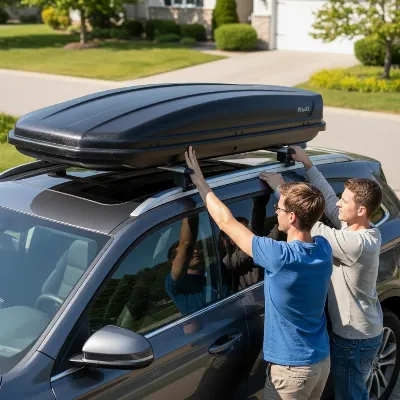 A person and helper safely installing a hard shell roof box on a car's roof bars in a driveway
Important Considerations When Using a Roof Box
Even after proper installation and loading, certain precautions must be taken while driving with a roof box to ensure a safe journey for everyone on the road.
- Driving Speed Limits: A roof box changes your vehicle’s aerodynamics and center of gravity. While modern designs minimize impact, it’s wise to drive conservatively. Adhere to speed limits, and consider reducing your speed, especially in strong winds, heavy rain, or on winding roads. This helps maintain vehicle stability and control.
- Vehicle Height Clearance: Always that a roof box significantly increases your vehicle’s overall height. Be extremely cautious when entering multi-story car parks, garages, drive-throughs, or passing under low bridges. It’s a good practice to measure your vehicle’s total height with the roof box installed and perhaps affix a reminder note on your dashboard.
- Regular Checks: Before every trip, and periodically during long journeys (e.g., during fuel stops), inspect your roof box. Ensure all mounting clamps or bolts are still securely tightened, the lid is locked, and the cargo inside is not shifting. Vibrations from driving can sometimes loosen fastenings.
- Maintenance and Storage: Keep your roof box clean and free of debris. When not in use, it’s recommended to remove the roof box (and roof bars) to reduce wind resistance, improve fuel efficiency, and prevent unnecessary wear on the components. Store the box in a dry, protected area.
Conclusion
Installing a hard shell roof box safely at home is an achievable process that significantly enhances your vehicle’s versatility and storage capacity. By diligently following the pre-installation checks, carefully executing each step of the mounting process, and adhering to safe loading practices, you can confidently prepare for your next adventure. that compatibility, proper tightening, and even weight distribution are paramount for safety and optimal performance. Always stay mindful of your vehicle’s altered dynamics while driving and perform regular checks to ensure everything remains secure. With a securely installed roof box, you’re not just adding storage; you’re adding peace of mind for every journey ahead.
What will your next adventure look like with all that extra space and newfound confidence?
Frequently Asked Questions
Can I install a roof box by myself?
While it’s possible for some smaller, lighter roof boxes, it is highly recommended to have a second person assist you when lifting and positioning the roof box onto your vehicle’s roof bars. This prevents potential injury and avoids scratching or damaging your car.
How do I know if my car is compatible with a roof box?
First, ensure your car has a suitable roof rack or roof bars installed. Then, check your vehicle’s owner’s manual for its maximum dynamic roof load capacity and any specific recommendations for roof accessories. Finally, verify that the roof box’s mounting system is compatible with your roof bars and that the box’s dimensions do not interfere with your vehicle’s features like the rear hatch.
What is the maximum speed I can drive with a roof box?
While there isn’t a universal maximum speed, most manufacturers recommend reducing your speed when driving with a roof box, especially in adverse weather conditions. Always adhere to local speed limits, and be aware that the added weight and wind resistance will affect your vehicle’s handling and braking.
How often should I check my roof box’s fastenings?
It’s crucial to check all mounting hardware and lid locks before every journey. For longer trips, make periodic stops (e.g., during fuel breaks) to re-inspect and tighten any fastenings that may have loosened due to road vibrations or wind resistance.
Does a roof box affect fuel efficiency?
Yes, a roof box, even an aerodynamically designed one, increases your vehicle’s frontal area and wind resistance. This typically leads to a slight decrease in fuel efficiency. Removing the roof box when not in use can help mitigate this impact.
