Embarking on a road trip with a roof box can significantly expand your vehicle’s cargo capacity, making family vacations or outdoor adventures much more manageable. However, the thought of your precious gear—or worse, the entire roof box—shifting or sliding on the highway is a daunting one that can quickly turn excitement into anxiety. Ensuring your roof box remains securely in place, even at highway speeds, is paramount for both the safety of your belongings and other road users. This guide, drawing on over a decade of hands-on experience with hundreds of roof box models, will equip you with the essential knowledge and practical advice to confidently secure your roof box, preventing any unwelcome movement during your travels.
What is a Roof Box, and Why is Secure Mounting Critical?
A roof box, often referred to as a cargo box or car top carrier, is an enclosed storage unit designed to be mounted on the roof of a vehicle, typically on a roof rack system. Its primary purpose is to provide additional storage space for luggage, camping gear, skis, snowboards, or other bulky items that won’t fit inside the vehicle. The benefits are clear: increased carrying capacity, protection of contents from weather and theft, and keeping your vehicle’s interior free for passengers.
However, these benefits rely entirely on a stable and secure installation. A roof box that slides or shifts on the highway is not just an inconvenience; it’s a significant safety hazard. Uncontrolled movement can lead to the box detaching from the vehicle, causing potential accidents, damage to your car and the box, and a dangerous obstruction for other drivers. Beyond catastrophic failure, even minor sliding can cause abrasive wear on your roof rack and vehicle paint, generate excessive noise, and lead to poor aerodynamic performance, increasing fuel consumption. Understanding the crucial link between proper installation and stability is the first step in ensuring a safe and stress-free journey.
Common Causes of Roof Box Sliding and How to Prevent Them
Several factors can contribute to a roof box sliding on the highway. Identifying these causes is key to implementing effective preventive measures.
Improper Installation and Mounting Hardware
The most frequent culprit behind a sliding roof box is incorrect installation. Many modern roof boxes feature quick-attach systems designed for ease of use, but these must be correctly engaged and tightened to ensure a secure grip on the crossbars.
- Loose Clamps: Over time, or if not sufficiently tightened initially, the mounting clamps or U-bolts can loosen. Vibrations and road bumps contribute to this.
- Incorrect Spacing: Roof rack crossbars must be spaced according to the roof box manufacturer’s recommendations. Incorrect spacing can lead to uneven weight distribution and insufficient support, allowing the box to flex and potentially slide.
- Incompatible Components: Using a roof box with an incompatible roof rack system can lead to an unstable connection. Always verify that your roof box and roof rack are compatible and designed to work together.
To prevent these issues, always double-check all mounting points before every trip and periodically during longer journeys. Follow the manufacturer’s installation instructions precisely, paying close attention to torque settings for any fasteners. Ensure the crossbars are correctly positioned to support the box evenly.
Overloading and Uneven Weight Distribution
|
Our Picks for the Best Roof Box in 2026
As an Amazon Associate I earn from qualifying purchases.
|
||
| Num | Product | Action |
|---|---|---|
| 1 | Pelican Cargo Cases |

|
| 2 | GarveeLife 46" x 36" Universal Roof Rack Cargo Carrier Basket, 200 Lbs Capacity Rooftop Cargo Rack, Car Top Luggage Holder Basket Heavy Duty for SUVs, Trucks, Vehicles |
|
| 3 | MIDABAO 20 Cubic Waterproof Duty Car Roof Top Carrier-Car Cargo Roof Top Bag, Waterproof & Coated Zippers includes Anti Slip Mat with or without Racks (20 Cubic Feet) |
|
| 4 | iBirdie Roof Rack Cargo Carrier 15.3 Cubic Feet, Soft-Shell Rooftop Cargo Box, Waterproof Heavy Duty 1200D for Car with/Without Roof Rack, Includes Anti-Slip Mat, Door Hooks, 46x34x17 inches |
|
| 5 | Car Rooftop Cargo Carrier Bag, 21 Cubic Feet 100% Waterproof Heavy Duty 840D Car Roof Bag for All Vehicle with/Without Racks - Anti-Slip Mat, 6 Door Hooks, Storage Bags, 2 Extra Straps, Luggage Lock |
|
| 6 | FIVKLEMNZ 21 Cubic Car Rooftop Cargo Carrier Roof Bag Waterproof for All Top of Vehicle with/Without Rack Includes Topper Anti-Slip Mat + Reinforced Straps + 6 Door Hooks + Luggage Lock |
|
| 7 | Sailnovo Rooftop Cargo Carrier Roof Bag, 20 Cubic feet Waterproof Roof Cargo Carrier fit car with/Without Luggage Rack - Vehicle Soft Shell Roof Cargo Box with Tie-Down Strap, Safety Hook |
|
| 8 | Asinking Car Rooftop Cargo Carrier Bag - 100% Waterproof Heavy Duty Car Roof Luggage Carrier 21 Cubic Feet, Fits All Vehicles with/Without Roof Rack - Easy Install & Triply Reinforced for Secure Use |
|
| 9 | iBirdie Roof Rack Cargo Carrier 32.1 Cubic Feet, XXL Soft-Shell Rooftop Cargo Box, Waterproof Heavy Duty 1200D for Car with/Without Roof Rack, Includes Anti-Slip Mat, Door Hooks, 60x37x25 inches |
|
| 10 | MeeFar Roof Rack Carrier Basket Universal Rooftop 51" X 36" X 5" + Waterproof Bag 15 Cubic Feet (44" 34" 17"), and Cargo Net with Attachment Hooks, Ratchet Straps |
|
The way you pack your roof box has a direct impact on its stability. Exceeding the roof box’s or your vehicle’s roof weight limit, or distributing the weight unevenly, can significantly increase the risk of sliding.
- Exceeding Weight Limits: Every roof box and vehicle roof has a maximum permissible load. Overloading puts undue stress on the mounting points, making them more prone to failure or slippage.
- Concentrated Weight: Placing all heavy items at one end or side of the box creates an unbalanced load, leading to excessive leverage and potential instability, especially when cornering or braking.
- Unsecured Contents: Items rattling around inside the box can shift during acceleration, braking, or turns. This dynamic movement can exert sudden forces on the roof box’s structure and mounting system, contributing to slippage.
Always distribute weight evenly within the roof box, placing heavier items in the center, directly over the vehicle’s crossbars. Use straps, cargo nets, or blankets to secure contents and prevent them from shifting. Never exceed the weight limits specified by both the roof box and your vehicle manufacturers.
Aerodynamic Forces and Driving Conditions
High speeds, strong crosswinds, and sudden maneuvers can generate significant aerodynamic forces that challenge the stability of a roof box.
- Wind Shear: On highways, especially open stretches or when passing large trucks, crosswinds can exert immense lateral force on a roof box, testing the strength of its mounting.
- Sudden Braking/Acceleration: Abrupt changes in speed create inertia that can cause the box, and its contents, to lurch forward or backward, stressing the mounting system.
- Sharp Turns: Cornering at speed generates centrifugal force that pushes the box outwards, again challenging the grip of the mounting clamps.
To mitigate these forces, adjust your driving habits. Drive at moderate speeds, especially in windy conditions or when encountering large vehicles. Maintain a safe following distance to avoid sudden braking, and take turns smoothly and gradually. Modern, aerodynamic roof box designs can help reduce wind resistance, but cautious driving remains the best defense.
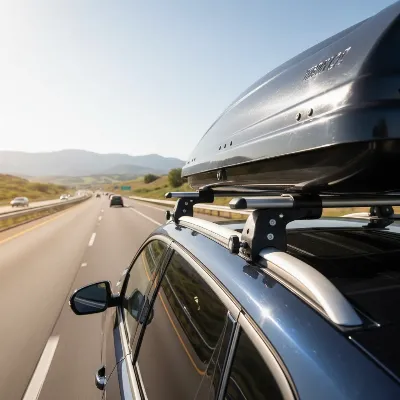 A securely mounted grey roof box on a dark SUV traveling on a highway, with strong visual emphasis on the stable connection to the roof rack, under bright daylight. The scene should convey safety and stability, with minimal motion blur to show secure attachment. Realistic, editorial style.
Essential Tips for Choosing a Stable Roof Box and Rack System
Selecting the right roof box and roof rack system is the foundation for preventing any sliding issues. Prioritize stability and compatibility from the start.
Compatibility with Your Vehicle and Roof Rack
Not all roof boxes fit all vehicles or roof racks. Ensure your chosen components are fully compatible.
- Vehicle Roof Type: Determine if your vehicle has flush rails, raised rails, fixed points, or bare roof. This dictates the type of roof rack needed.
- Crossbar Dimensions: Roof box mounting systems are designed to fit specific crossbar widths and thicknesses. Confirm your chosen box’s clamps or U-bolts will securely fit your crossbars.
- Weight Capacity: Check your vehicle’s maximum roof load capacity (found in the owner’s manual) and compare it with the roof box’s weight limit and your estimated cargo weight.
Always consult your vehicle’s manual and the roof box manufacturer’s specifications for compatibility and weight limits. Many manufacturers offer online fit guides to help you choose the correct system for your specific vehicle.
Robust Mounting Systems
The type and quality of the mounting system are crucial for stability. Look for systems that offer strong, secure attachment.
- “U-Bolt” or “PowerClick” Systems: These are common and effective. U-bolts wrap around the crossbars and are tightened with nuts inside the box. “PowerClick” or similar quick-release systems use an integrated mechanism that clamps onto the bars, often with a torque indicator to confirm correct tightness.
- Wide Clamping Area: A mounting system with a wider footprint or multiple clamping points per crossbar generally provides a more secure grip and better weight distribution.
- Metal vs. Plastic Components: While many systems use durable plastics, components that involve direct contact with the crossbars or bear significant load should ideally be robust metal or reinforced plastic for longevity and strength.
Invest in a roof box with a high-quality, proven mounting system. Don’t compromise on this feature, as it’s the primary safeguard against sliding.
Aerodynamic Design
While not directly preventing sliding, an aerodynamic design reduces wind resistance, which in turn minimizes the forces acting on the roof box and its mounting.
- Low Profile: Boxes that sit closer to the vehicle roof experience less wind shear.
- Tapered or Streamlined Shape: Designs that smoothly integrate with the vehicle’s airflow reduce drag and lift, making the ride quieter and more stable, especially at highway speeds.
Choosing an aerodynamically designed box can indirectly enhance stability by reducing the stress on the mounting points, contributing to a smoother and safer journey.
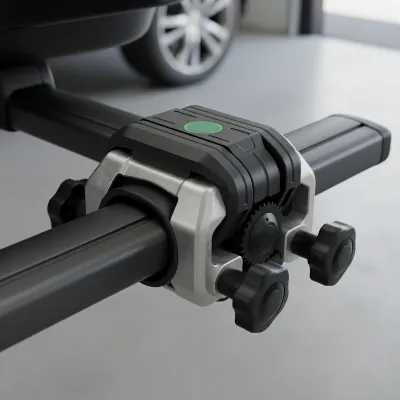 Close-up of a secure roof box mounting system clamp on a vehicle's crossbar, highlighting the robust connection and tightened fasteners for stability. The image should be detailed and instructional, showing proper installation.
Installation and Loading Best Practices for Maximum Security
Even with the best roof box, proper installation and meticulous loading are paramount to prevent sliding.
Step-by-Step Installation Guide
- Clean Roof and Crossbars: Ensure your vehicle’s roof and the roof rack crossbars are clean and free of dirt, grit, or ice. This prevents scratching and ensures the mounting system can achieve a firm grip.
- Position Crossbars Correctly: Refer to both your vehicle and roof box manuals for the recommended crossbar spacing. This is typically measured from the center of one crossbar to the center of the other. Incorrect spacing can compromise stability and stress the roof box.
- Lift and Center the Roof Box: With the help of another person if possible, carefully lift the roof box onto the crossbars. Center it both front-to-back and side-to-side. Most boxes have markings or guides for alignment. Ensure the box does not interfere with the rear hatch opening.
- Attach and Tighten Mounting System: Engage all mounting clamps or U-bolts. Follow the manufacturer’s instructions for tightening. Many quick-attach systems have a torque indicator (e.g., a click sound) that tells you when the correct tightness is reached. For U-bolt systems, tighten the nuts evenly, alternating between them to ensure even pressure.
- Test for Security: Once all mounting points are tightened, try to physically shake the roof box. There should be minimal to no movement. If it wiggles significantly, re-check all attachment points and tighten further as per instructions.
Strategic Loading to Prevent Shifting
- Check Weight Limits: Reiterate the importance of never exceeding the maximum weight limits of both your roof box and your vehicle’s roof.
- Distribute Weight Evenly: Place the heaviest items in the center of the box, directly over or between the roof rack crossbars. This keeps the center of gravity low and centered.
- Pack Densely: Fill the box completely to minimize internal space where items could shift. Use soft items like clothing, sleeping bags, or towels to fill gaps and cushion harder objects.
- Secure Contents Internally: Even when packed densely, use internal straps, cargo nets, or bungee cords to tie down your luggage within the roof box. This prevents items from sliding or tumbling during sudden stops or turns, which could otherwise exert internal forces on the box’s structure.
- Close and Lock: Ensure the roof box is properly closed and locked after loading. A common mistake is to forget to fully close the lid, which can cause aerodynamic issues and potential content loss.
Pre-Trip and Mid-Trip Checks
- Before Every Drive: Always perform a quick visual check of your roof box before starting a journey. Tug on it gently to ensure it’s still firmly attached.
- During Long Trips: For extended road trips, pull over safely every few hours or at fuel stops to re-check the mounting system. Vibrations and temperature changes can sometimes cause fasteners to loosen slightly. Re-tighten if necessary.
Important Driving Considerations with a Roof Box
Even with a perfectly installed and loaded roof box, your driving style plays a crucial role in its stability and safety.
Adjust Your Speed and Driving Habits
Driving with a roof box changes your vehicle’s aerodynamics and center of gravity.
- Moderate Speed: Reduce your highway speed. While a roof box might be rated for certain speeds, driving slightly below the limit in windy conditions or on uneven roads can significantly reduce stress on the mounting system.
- Smooth Maneuvers: Avoid sudden braking, rapid acceleration, or sharp turns. These actions create strong inertial forces that can challenge the roof box’s securement. Approach curves and intersections smoothly.
- Awareness of Crosswinds: Be extra vigilant in strong crosswind conditions or when passing or being passed by large trucks. The air turbulence generated by these vehicles can exert considerable force on your roof box. Slow down and maintain a firm grip on the steering wheel.
Account for Increased Vehicle Height
A roof box adds significant height to your vehicle. This is a critical consideration to prevent accidental damage.
- Clearance Awareness: Always be mindful of your vehicle’s new total height. Pay attention to clearance signs for parking garages, car washes, drive-throughs, tunnels, and low overhangs. It’s helpful to write your vehicle’s new height on a sticky note and place it on your dashboard as a reminder.
- Measuring Your Setup: Before your first trip, measure the total height of your vehicle with the roof box installed. This measurement will be invaluable for navigating restricted areas.
Regular Maintenance and Inspection
Treat your roof box and roof rack as critical components that require regular attention.
- Inspect for Wear: Periodically inspect the mounting hardware, straps, and the box itself for any signs of wear, cracks, or damage. Replace worn parts promptly.
- Lubrication: If your roof box has moving parts or locks, ensure they are clean and lightly lubricated as per the manufacturer’s recommendations.
- Storage: When not in use, store your roof box in a clean, dry place, ideally unmounted from your vehicle, to prolong its lifespan.
By adhering to these driving considerations, you not only protect your roof box and its contents but also enhance overall road safety for everyone.
Conclusion
Preventing your roof box from sliding on the highway boils down to three core principles: choosing the right equipment, installing it meticulously, and driving judiciously. From selecting a robust mounting system compatible with your vehicle to carefully distributing weight and adopting a more conservative driving style, each step contributes to a secure and stress-free journey. Remember to routinely inspect all connections, especially before and during long trips, as even the best systems can be compromised by neglect. With these comprehensive insights and practical advice, you can hit the road with confidence, knowing your cargo is safely secured above you. What adventures will your securely mounted roof box enable next?
Frequently Asked Questions
How tight should a roof box be on the crossbars?
A roof box should be tightened until it is firmly secured to the crossbars with no discernible movement when gently shaken. Many modern quick-attach systems have a built-in torque indicator that clicks or provides a visual signal when the correct tightness is achieved. Avoid over-tightening, as this can damage the roof box or crossbars.
Can a roof box come off on the highway?
Yes, a roof box can potentially come off on the highway if it is improperly installed, severely overloaded, or exposed to extreme forces from high speeds or collisions. This is why meticulous installation, adherence to weight limits, regular checks, and cautious driving are critically important to ensure safety and prevent detachment.
What should I put in the center of my roof box?
You should place the heaviest items directly in the center of your roof box, ideally positioned over or between the roof rack crossbars. This helps to maintain a low and balanced center of gravity for your vehicle, reducing leverage and improving overall stability, especially during turns or braking.
Does a roof box affect car handling at high speeds?
Yes, a roof box can significantly affect car handling at high speeds. It raises your vehicle’s center of gravity, making it more susceptible to sway and crosswinds. It also adds aerodynamic drag, which can increase fuel consumption and create more noise. Adjusting your speed and driving smoothly is crucial when carrying a roof box.
How often should I check my roof box mounting?
It is highly recommended to check your roof box mounting before every trip, especially the first time you use it. For longer journeys, pull over safely every few hours or at scheduled stops to re-check all attachment points and ensure they remain tight and secure. Vibrations and road conditions can sometimes cause fasteners to loosen.
Get our weekly buyer guide
Practical specs, not advice. Unsubscribe anytime.
