Embarking on a winter ski trip often means grappling with bulky skis, snowboards, boots, and a many cold-weather clothing. Cramming all this gear inside your vehicle not only limits passenger comfort and visibility but can also lead to damaged equipment and an uncomfortable journey. This is where a heavy-duty roof box becomes an indispensable travel companion, transforming your car into a spacious gear hauler. Designed to withstand the rigors of winter travel, these robust carriers offer secure, weather-protected storage, ensuring your valuable ski and snowboard equipment arrives at the slopes in pristine condition, ready for action.
What is a Roof Box? Why You Need One for Winter Ski Gear?
A roof box, also known as a rooftop cargo box, is a hard-shell container securely mounted to your vehicle’s roof rack system. It provides significant additional storage space, making it an ideal solution for transporting cumbersome items that won’t fit inside your car. For winter ski gear, its utility is unparalleled. Beyond just increasing capacity, a quality roof box protects your equipment from the elements—snow, sleet, road salt, and mud—which can otherwise cause rust or damage to bindings and bases.
Imagine heading to the mountains: your skis or snowboards are safely stowed, shielded from road debris and harsh weather. Your boots, helmets, and damp winter clothing can also be neatly packed away, freeing up precious interior space for passengers and personal items. This not only enhances comfort during long drives but also improves safety by preventing loose gear from becoming projectiles in the event of sudden braking. A specialized ski roof box ensures your valuable investment in winter sports equipment is safeguarded, allowing you to focus on the thrill of the slopes. For expert automotive roof reviews on this site.
Types of Heavy Duty Roof Boxes for Winter Ski Gear
Choosing the right heavy-duty roof box for your winter ski gear involves understanding the various types available, each offering distinct advantages for cold-weather performance and capacity.
Roof Box Materials for Harsh Climates
The durability and performance of a roof box in winter conditions are largely dictated by its material. The two primary materials are ABS plastic and fiberglass reinforced polyester.
- ABS Plastic: Many modern roof boxes are constructed from ABS plastic, often with UV inhibitors. This material is known for being lightweight and keeping the overall box weight manageable. However, ABS plastic can become stiff and more prone to cracking in extremely cold temperatures. High-quality ABS boxes will feature reinforced designs to mitigate this.
- Fiberglass Reinforced Polyester (Fiberglass): Fiberglass boxes are significantly more robust and durable than ABS. They are inherently stiffer, providing better resistance to flex under crosswinds and heavy snow loads. Fiberglass is less susceptible to becoming brittle in freezing temperatures, offering superior crash safety and longevity, making it an excellent choice for frequent winter travelers and protecting expensive gear. While often pricier, the enhanced durability and resistance to cold weather often justify the investment.
Look for boxes with a rigid lid, internal ribs, and a reinforced floor pan, which contribute to overall strength and ensure better latch alignment and sealing over time, especially crucial when battling winter weather.
Size and Capacity for Your Ski Equipment
|
Our Picks for the Best Roof Box in 2026
As an Amazon Associate I earn from qualifying purchases.
|
||
| Num | Product | Action |
|---|---|---|
| 1 | Car Rooftop Cargo Carrier Bag, 21 Cubic Feet 100% Waterproof Heavy Duty 840D Car Roof Bag for All Vehicle with/Without Racks - Anti-Slip Mat, 6 Door Hooks, Storage Bags, 2 Extra Straps, Luggage Lock |

|
| 2 | FIVKLEMNZ 21 Cubic Car Rooftop Cargo Carrier Roof Bag Waterproof for All Top of Vehicle with/Without Rack Includes Topper Anti-Slip Mat + Reinforced Straps + 6 Door Hooks + Luggage Lock |
|
| 3 | Asinking Car Rooftop Cargo Carrier Bag - 100% Waterproof Heavy Duty Car Roof Luggage Carrier 21 Cubic Feet, Fits All Vehicles with/Without Roof Rack - Easy Install & Triply Reinforced for Secure Use |
|
| 4 | GarveeLife 46" x 36" Universal Roof Rack Cargo Carrier Basket, 200 Lbs Capacity Rooftop Cargo Rack, Car Top Luggage Holder Basket Heavy Duty for SUVs, Trucks, Vehicles |
|
| 5 | MeeFar Roof Rack Carrier Basket Universal Rooftop 51" X 36" X 5" + Waterproof Bag 15 Cubic Feet (44" 34" 17"), and Cargo Net with Attachment Hooks, Ratchet Straps |
|
| 6 | MIDABAO 20 Cubic Waterproof Duty Car Roof Top Carrier-Car Cargo Roof Top Bag, Waterproof & Coated Zippers includes Anti Slip Mat with or without Racks (20 Cubic Feet) |
|
| 7 | iBirdie Roof Rack Cargo Carrier 32.1 Cubic Feet, XXL Soft-Shell Rooftop Cargo Box, Waterproof Heavy Duty 1200D for Car with/Without Roof Rack, Includes Anti-Slip Mat, Door Hooks, 60x37x25 inches |
|
| 8 | Sailnovo Rooftop Cargo Carrier Roof Bag, 20 Cubic feet Waterproof Roof Cargo Carrier fit car with/Without Luggage Rack - Vehicle Soft Shell Roof Cargo Box with Tie-Down Strap, Safety Hook |
|
| 9 | Pelican Cargo Cases |
|
| 10 | iBirdie Roof Rack Cargo Carrier 15.3 Cubic Feet, Soft-Shell Rooftop Cargo Box, Waterproof Heavy Duty 1200D for Car with/Without Roof Rack, Includes Anti-Slip Mat, Door Hooks, 46x34x17 inches |
|
The dimensions and volume of your roof box are critical for accommodating ski and snowboard gear effectively.
- Length: This is paramount for skis and snowboards. Adult skis typically range from 160–190cm, while snowboards are 140–170cm. A suitable ski roof box should be at least 15-20cm longer than your longest item to allow for bindings and a comfortable fit. For family or group trips with longer skis (e.g., cross-country skis up to 210cm), consider boxes 200cm or more in internal length.
- Short boxes (130–160cm): Ideal for shorter snowboards, boots, and helmets.
- Medium boxes (160–180cm): Can fit skis up to 170cm and most snowboards.
- Long boxes (180cm+): Best for longer skis (185cm+) and substantial gear loads.
- Capacity (Liters):
- Small (400–500L): Typically holds 2 pairs of skis or 1 snowboard, suitable for solo or couple trips.
- Medium (600–740L): Accommodates 3–4 pairs of skis, great for small families.
- Large (850L and above): Can comfortably store multiple skis, snowboards, boots, helmets, and extra luggage, perfect for extended trips or larger groups.
Consider not just the length of your skis, but also the total volume needed for boots, helmets, poles, and other bulky winter apparel.
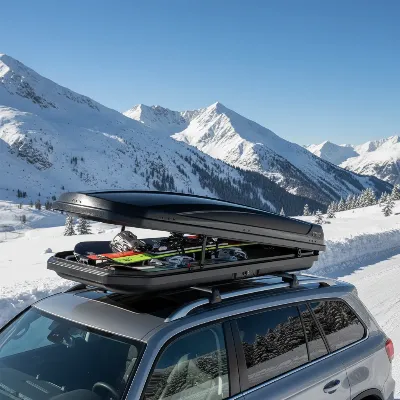 A heavy-duty roof box securely mounted on a snow-covered SUV, with skis and snowboards visible inside, set against a backdrop of snowy mountains.
Aerodynamic Design and Essential Features
Modern roof boxes are engineered with more than just storage in mind; their design and features significantly impact your driving experience, especially in winter.
- Aerodynamic Design: A streamlined, tapered profile is crucial for reducing wind resistance, minimizing drag, and enhancing fuel efficiency on long drives to the slopes. This design also helps to reduce wind noise, making for a quieter journey.
- Dual-Side Opening: This feature is invaluable, particularly in tight ski resort parking lots. It allows you to access your gear from either side of the vehicle, making loading and unloading much more convenient.
- Integrated Locking Mechanisms: Robust, secure locks are essential for protecting your valuable equipment from theft. Many heavy-duty boxes offer multi-point locking systems and can be operated with a single key for convenience. Look for systems that provide an audible or visual confirmation that the lid is fully shut and locked.
- Quick-Mount Systems: Easy and tool-free installation systems, often involving “click” or “power-click” mechanisms, simplify attaching and removing the box from your roof bars. This is especially appreciated on cold mornings when you want to get on the road quickly.
- Weather Sealing: A continuous gasket and a lipped shell interface are vital for preventing water, snow, and road salt from entering the box, keeping your gear dry and protected from the elements.
- Internal Tie-Downs: Sturdy internal straps or lashing points, preferably made of metal, are critical for securing your skis, snowboards, and other items, preventing them from shifting during transit and minimizing damage in case of sudden stops.
- Glove-Friendly Latches: In freezing conditions, simple and easy-to-operate latches that can be manipulated while wearing gloves significantly improve user experience.
Comparison Table: Top Heavy Duty Roof Boxes for Winter Ski Gear
Choosing the best roof box means weighing features against your specific winter needs. Here’s a comparison of some highly-regarded heavy-duty options popular for ski and snowboard enthusiasts:
| Model | Material | Capacity (Litres / Skis) | Max Ski Length (cm) | Key Winter Features | Pros | Cons |
|---|---|---|---|---|---|---|
| Thule Motion XT XL | ABS Plastic | 500L / 5-7 skis | 200 | Dual-Side Opening, PowerClick mounting, SlideLock system, aerodynamic | Excellent aerodynamics, secure, easy installation, wide range of sizes. | Can be expensive, high-profile for some garages. |
| Yakima SkyBox NX XL | ABS Plastic | 520L / 5-7 skis | 215 | Dual-Side Opening, quick-release mounting, SuperLatch security, reinforced lid, low-profile clamps | Good balance of capacity & sleek design, easy to mount/remove, durable construction. | Some users report stiffness in cold weather for opening/closing. |
| Thule Pulse Alpine | ABS Plastic | 420L / 3-5 skis | 210 | Dual-Side Opening, FastGrip mounting, aerodynamic profile | Durable, wind-resistant, good for heavy snow, easy access. | Installation may require two people, less interior organization than some premium models. |
| Inno Wedge 660 | 3-Layer ABS Plastic | 400L / 4-6 skis | 180 | Dual-Side Opening, Memory Mount system, low-profile, aerodynamic | Sleek, low-profile design, good for smaller vehicles, decent capacity for its size, secure. | Max ski length is shorter than some competitors, not as wide for bulky items. |
Note: Capacities and features may vary slightly between specific versions and years.
Buying Guide: How to Select Your Ideal Ski Roof Box
Selecting the perfect heavy-duty roof box for your winter ski adventures requires careful consideration of several factors to ensure it meets your needs, fits your vehicle, and provides reliable protection for your gear.
Assess Your Winter Gear Needs
Start by making an inventory of what you typically carry on a ski trip.
- What are you transporting? Primarily skis and snowboards, or also boots, helmets, poles, clothing, and other luggage?
- How many people? Are you equipping yourself, a partner, or a whole family/group? This directly impacts the required length and capacity. Measure your longest skis or snowboard to ensure the internal length of the box can accommodate them with a little extra room (at least 15-20cm buffer is recommended).
Vehicle Compatibility and Fit
A roof box must integrate seamlessly with your vehicle.
- Roof Rack System: Do you have factory-installed roof rails or aftermarket crossbars? Most roof boxes attach directly to crossbars, so these are a prerequisite. Check the weight rating of your vehicle’s roof and your crossbars.
- Box Dimensions vs. Vehicle Size: Ensure the roof box’s length does not overhang your windshield or interfere with your rear hatch opening, especially on smaller SUVs or wagons. A box that is too long can also impede your vehicle’s aerodynamics and look awkward. Also, measure your total vehicle height with the box installed to avoid unwelcome surprises in garages, tunnels, or parking structures with height restrictions.
- Crossbar Spacing: Confirm that the mounting system of your chosen roof box is compatible with the spacing of your vehicle’s crossbars.
Prioritize Winter-Specific Features
For heavy-duty winter use, certain features are non-negotiable.
- Robust Weather Sealing: Look for boxes with tight, continuous seals around the lid to prevent snow, ice melt, and road spray from seeping in and damaging your gear.
- Secure Locking Mechanisms: Multiple locking points and a sturdy, reliable key system are essential for deterring theft, especially when leaving expensive equipment unattended at trailheads or hotels.
- Internal Tie-Downs: Strong internal straps or anchor points are crucial for securing skis and snowboards, preventing them from sliding around and potentially damaging the box or themselves during transit.
- Material Durability in Cold: Prioritize fiberglass or high-grade, cold-resistant ABS plastic that won’t become brittle in freezing temperatures.
- Ease of Use in Cold: Dual-side opening and glove-friendly latches and locking mechanisms greatly enhance usability when temperatures drop.
Brand Reputation and Real-World Reviews
Investigate reputable brands known for quality and durability in winter conditions, such as Thule, Yakima, and Inno. Read user reviews specifically from individuals who use their roof boxes for ski or snowboard trips. Pay attention to comments regarding:
- Performance in harsh weather (snow, ice, high winds).
- Ease of installation and removal in cold temperatures.
- Durability of locks and hinges over time.
- Any issues with water ingress or cracking.
Compare Prices and Reputable Dealers
Roof boxes are a significant investment. Compare prices from various authorized dealers to find the best value, but beware of deals that seem too good to be true, as they might indicate counterfeit or low-quality products. Purchasing from reputable retailers often guarantees warranty support and access to replacement parts, which can be invaluable over the lifespan of your roof box.
Installing and Safely Using Your Roof Box for Ski Trips
Proper installation and thoughtful usage are paramount to ensuring both the safety of your gear and everyone on the road.
Before you begin installation, always consult your vehicle’s owner’s manual for its maximum roof load rating, and your roof rack’s instructions for its load limits. The total weight of the roof box, the crossbars, and your cargo must never exceed the lowest of these ratings.
Installation: Step-by-Step Process
- Prepare Your Vehicle: Ensure your roof is clean and free of debris. Confirm your crossbars are properly installed and spaced according to the roof box manufacturer’s instructions. Standard spacing is typically between 24 and 36 inches apart.
- Position the Box: With assistance, carefully lift the roof box onto your crossbars. Center it side-to-side and ensure the front of the box faces forward (most boxes have a “Front” label). Leave a few inches of clearance between the box and your vehicle’s rear hatch to prevent interference when opening.
- Secure the Box: Locate the mounting hardware inside the box (clamps, bolts, or T-slot adapters). Loosen the clamps, position them around the crossbars, and then tighten them securely. Many modern systems feature “click” indicators to confirm proper torque. Tighten in a crisscross pattern (front-left, rear-right, front-right, rear-left) to ensure even pressure.
- Test Stability: After tightening all mounting points, gently try to move the box from side to side and front to back. There should be no significant movement or wobble. Double-check all connections.
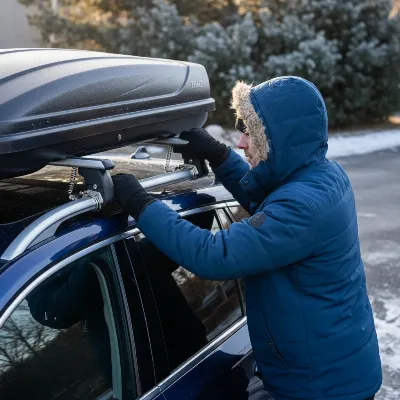 A person carefully installing a heavy-duty roof box onto the roof rack of a car, ensuring proper alignment and secure attachment of the mounting clamps.
Loading Your Ski Gear Safely
How you load your roof box impacts driving stability and gear protection.
- Distribute Weight Evenly: Place heavier items like ski boots or helmets low in the box and as close to the center of the vehicle as possible. Lighter, bulkier items such as jackets and ski pants can fill the remaining space. Avoid piling all weight on one side.
- Secure All Contents: Use the internal straps or tie-down points provided in the roof box to firmly secure your skis, snowboards, poles, and other gear. Unsecured items can shift during sudden braking or turns, potentially damaging the box or breaking through its walls.
- Don’t Overpack: Leave a small amount of space (1-2 inches) at the top of the box to ensure the lid closes easily and completely without stressing the seals or locking mechanisms. Overpacking can compromise the box’s weather resistance and security.
- Keep Heavy Items Inside: For exceptionally heavy items like multiple ski boots, consider keeping them inside the vehicle’s trunk or cabin if space allows, further lowering your vehicle’s center of gravity.
Regular Checks and Maintenance
Before each trip, especially long ones, perform a quick check:
- Mounting Hardware: Ensure all clamps and bolts securing the roof box to the crossbars are still tight.
- Lid and Locks: Verify the lid is fully closed and securely locked. Test the locking mechanism.
- Internal Straps: Confirm that all gear inside is still tightly secured.
Crucial Tips for Driving with a Ski Roof Box
Driving with a roof box changes your vehicle’s dynamics. Being aware of these changes and taking precautions will ensure a safe and smooth journey to your winter destination.
- Adhere to Speed Limits: While there’s no universal legal speed limit for cars with roof boxes, manufacturers generally recommend keeping speeds below 75-80 mph (120-130 km/h). Higher speeds significantly increase wind resistance, affect fuel economy, and put more stress on the mounting hardware and the box itself. The added weight and changed aerodynamics can also impact your vehicle’s handling, especially in crosswinds or during emergency maneuvers.
- Be Mindful of Vehicle Height: A roof box adds considerable height to your vehicle. Always be aware of your total height, especially when entering garages, underground parking lots, drive-thrus, or areas with low overhangs. It’s a good practice to measure your vehicle’s height with the roof box installed and keep this number in mind.
- Adjust Driving Style: With a roof box, your vehicle’s center of gravity is higher, which can affect stability. Take corners more slowly and be prepared for increased braking distances. Avoid sudden lane changes or aggressive steering, particularly in snowy or icy conditions.
- Monitor Wind Noise and Fuel Efficiency: Expect a slight increase in wind noise and a decrease in fuel efficiency due to the added drag. Aerodynamic boxes minimize these effects, but some impact is inevitable.
- Regular Inspections During Your Trip: For longer journeys, pull over periodically to check that the roof box is still securely attached, and its contents are not shifting. This is especially important after driving over rough terrain or through strong winds.
“A robust roof box is only as good as its installation and how thoughtfully it’s loaded. Neglecting these steps can turn a convenient accessory into a serious hazard on winter roads.” – Sarah Jenkins, Automotive Safety Expert
Conclusion
A heavy-duty roof box is an invaluable investment for any winter sports enthusiast, offering unparalleled convenience, protection, and peace of mind for transporting skis, snowboards, and all your essential gear. From shielding your equipment against harsh winter elements to reclaiming vital interior space, these robust carriers ensure your journey to the slopes is as comfortable and stress-free as possible. By carefully considering materials, size, features like dual-side opening and secure locking, and adhering to safe installation and driving practices, you can choose a roof box that perfectly complements your vehicle and your winter adventures.
Are you ready to improve your next ski trip experience with the perfect heavy-duty roof box?
Frequently Asked Questions
What makes a roof box “heavy duty” for winter?
A heavy-duty roof box for winter is typically constructed from more robust materials like fiberglass or high-grade ABS plastic designed to withstand extreme cold without becoming brittle. It features enhanced weather sealing, stronger locking mechanisms, and often reinforced structures to handle heavier loads and harsh driving conditions like snow, ice, and road salt.
Can all roof boxes accommodate skis and snowboards?
While many roof boxes can hold some ski gear, specific ski roof boxes or longer cargo boxes are designed with adequate internal length (180cm+) to fit adult skis and snowboards comfortably. Always check the internal dimensions against your longest gear to ensure a proper fit, especially for cross-country skis or multiple boards.
How do I prevent my roof box from leaking in heavy snow or rain?
To prevent leaking, ensure your roof box has continuous, well-maintained weather seals around the lid. During installation, make sure the lid closes completely and the locking mechanisms are fully engaged to create a tight seal. Regularly inspect the seals for cracks or wear, and clean debris from the sealing surfaces.
Will a roof box significantly impact my car’s fuel economy?
Yes, adding a roof box will generally decrease your car’s fuel economy due to increased aerodynamic drag. The impact varies depending on the box’s shape (more aerodynamic designs reduce the effect), your driving speed, and wind conditions. Driving at lower speeds can help mitigate the reduction in fuel efficiency.
Is it safe to leave a roof box on my car all year round?
While roof boxes are designed to be durable, it’s generally recommended to remove them when not in use. Prolonged exposure to sun (UV radiation), extreme temperatures, and road grime can accelerate wear and tear. Removing the box can also slightly improve fuel economy and reduce unnecessary stress on your roof rack components.
What is the maximum speed I can drive with a roof box?
Most roof box manufacturers recommend a maximum speed of 75-80 mph (120-130 km/h) when a roof box is installed. Exceeding this speed can compromise the box’s stability, increase wind noise, and place excessive strain on the mounting hardware, potentially leading to dangerous situations. Always consult your specific roof box’s manual for its recommended speed limit.
Get our weekly buyer guide
Practical specs, not advice. Unsubscribe anytime.
