Owning a cargo roof box significantly enhances your vehicle’s storage capacity, opening up new possibilities for road trips, camping, and transporting bulky gear. However, like any valuable investment, your roof box requires diligent care and attention to ensure its longevity, optimal performance, and continued reliability. Neglecting its maintenance can lead to premature wear, reduced security, and even damage to your precious cargo. This guide will provide you with comprehensive insights and practical steps to keep your roof box in pristine condition for years of adventures to come.
What is a Roof Box? Why Do You Need One?
A roof box, often referred to as a cargo box, is a hard-shell container securely mounted to the roof rack of a vehicle. It provides invaluable additional storage space, freeing up interior room and allowing you to comfortably transport more luggage, sports equipment, or camping gear. Whether you’re embarking on a family vacation, a ski trip, or simply need extra room for everyday hauling, a roof box offers convenience, security, and protection from the elements. This expanded capacity means less clutter inside your car and a more comfortable journey for all passengers.
The benefits of using a roof box are numerous. It increases your vehicle’s carrying capacity without compromising passenger comfort or rear visibility. Your belongings are protected from weather conditions and potential theft, thanks to the durable shell and integrated locking systems. Modern roof boxes are designed with aerodynamics in mind, helping to minimize wind noise and drag, which can contribute to better fuel efficiency compared to less streamlined alternatives. To fully enjoy these advantages, understanding how to care for your roof box is paramount.
Types of Roof Boxes Popular in the Market
The market offers a diverse range of roof boxes, each designed to cater to different needs, preferences, and vehicle types. Understanding these variations can help you appreciate the specific maintenance considerations for your particular model.
Roof Boxes by Material
The primary materials used in roof box construction are engineered for durability and performance, each with distinct characteristics impacting maintenance.
- ABS Plastic: Acrylonitrile Butadiene Styrene (ABS) is a thermoplastic polymer highly favored for its balance of strength, lightweight properties, and impact resistance. ABS boxes are generally easier to maintain and often more cost-effective. They offer good UV protection, though prolonged exposure to extreme cold can make them stiff and brittle, potentially leading to cracking.
- Fiberglass: Fiberglass-reinforced polyester is known for being significantly more robust and durable than ABS. These boxes typically boast higher crash safety ratings and can handle greater loads. Fiberglass is less susceptible to temperature fluctuations, making it a reliable choice for diverse climates. However, repairs for significant damage on fiberglass models can be complex and costly.
- Metal: While less common for consumer roof boxes due to weight and potential for corrosion, some specialized cargo carriers may feature metal components. These would require rust prevention and specific care for metal surfaces.
|
Our Picks for the Best Roof Box in 2026
As an Amazon Associate I earn from qualifying purchases.
|
||
| Num | Product | Action |
|---|---|---|
| 1 | Pelican Cargo Cases |

|
| 2 | MIDABAO 20 Cubic Waterproof Duty Car Roof Top Carrier-Car Cargo Roof Top Bag, Waterproof & Coated Zippers includes Anti Slip Mat with or without Racks (20 Cubic Feet) |
|
| 3 | MeeFar Roof Rack Carrier Basket Universal Rooftop 51" X 36" X 5" + Waterproof Bag 15 Cubic Feet (44" 34" 17"), and Cargo Net with Attachment Hooks, Ratchet Straps |
|
| 4 | Asinking Car Rooftop Cargo Carrier Bag - 100% Waterproof Heavy Duty Car Roof Luggage Carrier 21 Cubic Feet, Fits All Vehicles with/Without Roof Rack - Easy Install & Triply Reinforced for Secure Use |
|
| 5 | iBirdie Roof Rack Cargo Carrier 32.1 Cubic Feet, XXL Soft-Shell Rooftop Cargo Box, Waterproof Heavy Duty 1200D for Car with/Without Roof Rack, Includes Anti-Slip Mat, Door Hooks, 60x37x25 inches |
|
| 6 | iBirdie Roof Rack Cargo Carrier 15.3 Cubic Feet, Soft-Shell Rooftop Cargo Box, Waterproof Heavy Duty 1200D for Car with/Without Roof Rack, Includes Anti-Slip Mat, Door Hooks, 46x34x17 inches |
|
| 7 | GarveeLife 46" x 36" Universal Roof Rack Cargo Carrier Basket, 200 Lbs Capacity Rooftop Cargo Rack, Car Top Luggage Holder Basket Heavy Duty for SUVs, Trucks, Vehicles |
|
| 8 | Sailnovo Rooftop Cargo Carrier Roof Bag, 20 Cubic feet Waterproof Roof Cargo Carrier fit car with/Without Luggage Rack - Vehicle Soft Shell Roof Cargo Box with Tie-Down Strap, Safety Hook |
|
| 9 | Car Rooftop Cargo Carrier Bag, 21 Cubic Feet 100% Waterproof Heavy Duty 840D Car Roof Bag for All Vehicle with/Without Racks - Anti-Slip Mat, 6 Door Hooks, Storage Bags, 2 Extra Straps, Luggage Lock |
|
| 10 | FIVKLEMNZ 21 Cubic Car Rooftop Cargo Carrier Roof Bag Waterproof for All Top of Vehicle with/Without Rack Includes Topper Anti-Slip Mat + Reinforced Straps + 6 Door Hooks + Luggage Lock |
|
When considering materials, that lighter boxes contribute less to fuel consumption. The choice of material also dictates cleaning agents; harsh chemicals should always be avoided, especially on plastics.
Roof Boxes by Size and Capacity
Roof boxes come in various sizes and capacities, measured in liters, to accommodate different vehicles and storage requirements.
- Small (e.g., 200-300 liters): Ideal for compact cars or individuals needing extra space for a weekend bag or light gear.
- Medium (e.g., 300-450 liters): A popular choice for small families, suitable for luggage, camping essentials, or a few sets of skis.
- Large (e.g., 450-600+ liters): Best for larger vehicles, big families, or those transporting extensive sports equipment like multiple skis, snowboards, or bulky camping gear.
The size of your roof box should not exceed the dimensions of your vehicle to maintain safety and aerodynamics. A good rule of thumb is that the box should not obscure your view or extend significantly beyond the windshield. The capacity needed directly correlates with the amount and type of gear you plan to transport, making this a critical consideration in your initial selection.
Roof Boxes by Style and Design
Modern roof box designs prioritize both aesthetics and functionality, incorporating features that enhance user experience and vehicle performance.
- Aerodynamic Designs: Many roof boxes feature sleek, low-profile shapes that minimize wind resistance and noise. This not only makes for a quieter ride but can also contribute to better fuel economy.
- Dual-Side Opening: This convenient feature allows the box to be opened from either side of the vehicle, making loading and unloading easier, especially in tight parking spaces.
- Quick-Mount Systems: Advanced mounting mechanisms enable fast and tool-free installation and removal of the roof box from your roof bars. This is particularly useful for those who frequently attach and detach their box.
- Security Features: Integrated multi-point locking systems and sturdy hinges are standard, ensuring your belongings are safe and secure. These components, while robust, are also crucial areas for regular maintenance.
 A sleek, aerodynamic black roof box mounted on a silver SUV, parked in a scenic mountain area, demonstrating style and functionality
Comparison Table of Top Roof Box Models
Choosing the right roof box involves weighing various factors, from material to features and price. Here’s a comparative overview of common characteristics you might find across leading models, highlighting aspects relevant to performance and maintenance.
| Feature | ABS Plastic Models | Fiberglass Models | Premium Features (Common in both) |
|---|---|---|---|
| Durability | Good impact resistance, lighter. | Excellent robustness, very durable. | Enhanced structural integrity, advanced polymers. |
| Weight | Lighter, better for fuel economy. | Heavier due to material density. | Optimized for strength-to-weight ratio. |
| Weather Resistance | Good against rain/dust, UV protection. | Superior resistance to extreme temperatures. | Advanced sealing, often waterproof. |
| Cost | Generally more affordable. | Higher price point due to material/manufacturing. | Higher end of the price spectrum. |
| Repairability | Minor cracks with epoxy, larger damage can be hard. | Can be repaired with fiberglass kits. | Specialized repair kits may be available. |
| Noise Reduction | Aerodynamic designs help reduce wind noise. | Aerodynamic designs help reduce wind noise. | Optimized aerodynamic profiles, sound dampening. |
| Security | Multi-point locking systems. | Robust locking mechanisms, stronger shell. | Central locking, reinforced lids, stronger latches. |
| Ease of Cleaning | Easy with mild soap and water. | Easy with mild soap and water. | Surfaces designed for easy cleaning. |
| Storage Impact | Can warp in heat, brittle in extreme cold. | More stable in temperature variations. | Less susceptible to environmental stress. |
This table serves as a general guide. Always consult specific product specifications and user reviews for the most accurate information to match your needs and ensure your chosen model will stand the test of time with proper care.
Guide to Choosing a Suitable Roof Box (Buying Guide)
Selecting the perfect roof box requires careful consideration of your specific needs, your vehicle’s capabilities, and the features that matter most to you. Making an informed decision at the outset can save you hassle and ensure maximum satisfaction.
Determine Your Usage Needs
Start by clearly defining what you’ll use the roof box for and how frequently.
- What will you carry? (e.g., skis, camping gear, luggage, strollers) This dictates the required length, width, and internal volume. Skis need a longer box, while camping gear might benefit from a wider, shorter one.
- How much capacity do you need? Consider the number of people and the amount of gear. A family of four on a week-long road trip will require significantly more space than an individual going for a weekend hike.
- How often will you use it? Frequent users might prioritize quick-mount systems and highly durable materials, while occasional users might opt for a more budget-friendly option.
Choose Material and Size Suitable for Your Vehicle
The material and physical dimensions of the roof box are critical for compatibility and safety.
- Vehicle Compatibility: Ensure the roof box is compatible with your car’s roof rack system. Most roof boxes fit standard crossbars, but check mounting specifications.
- Size Limits: The roof box should not obstruct the tailgate from opening fully, nor should it extend too far forward to impede your view. Always check your vehicle’s maximum roof load capacity (including the weight of the roof box itself and your roof bars).
- Material Choice: As discussed, ABS offers a lightweight and cost-effective solution, while fiberglass provides superior durability. Your climate and typical usage conditions might influence this choice.
Consider Convenient Features
Modern roof boxes come with a host of features designed to enhance usability and security.
- Security Locks: Look for multi-point locking systems to secure both the lid and the contents. Some boxes feature a key-cannot-be-removed-unless-closed safety mechanism.
- Mounting System: Quick-release or tool-free mounting systems make installation and removal much simpler.
- Opening Mechanism: Dual-side opening offers great flexibility, while gas struts assist in effortlessly opening and holding the lid open.
- Waterproofing: Ensure the box has effective seals and a weather-resistant design to protect your gear from rain, snow, and dust.
Research Brands and User Reviews
Before purchasing, invest time in researching reputable brands known for quality and customer support.
- Trusted Brands: Brands like Thule, Yakima, and Rhino-Rack are industry leaders with a track record of producing reliable and durable roof boxes.
- User Feedback: Read customer reviews for real-world insights into a product’s performance, ease of use, durability, and any common issues. This can help you identify potential long-term problems.
- Warranty: A good warranty indicates a manufacturer’s confidence in their product. Understand the terms and conditions of any guarantee.
Compare Prices and Find Reputable Places to Buy
Price can vary significantly, so shop around to find the best value, but always prioritize quality and reliability.
- Price Comparison: Check prices from various retailers, both online and in physical stores. Be wary of deals that seem too good to be true, as they might indicate lower quality.
- Authorized Dealers: Purchase from authorized dealers to ensure you receive a genuine product with a valid warranty and access to after-sales service.
- Installation Services: Some retailers offer installation services, which can be beneficial if you’re unsure about fitting the box yourself.
How to Install and Use Your Roof Box Safely
Proper installation and safe usage are crucial for preventing accidents, ensuring the security of your cargo, and prolonging the life of your roof box.
Correct Roof Box Installation Steps
While specific steps may vary by model, here’s a general guide for safe installation:
- Install Roof Rack: Ensure your vehicle’s roof rack (crossbars) is correctly installed and securely fastened according to the manufacturer’s instructions.
- Position the Roof Box: With assistance, carefully lift the roof box onto the crossbars. Center it both longitudinally and laterally on the vehicle roof. Ensure it doesn’t obstruct the tailgate or interfere with antenna operation.
- Attach Mounting Hardware: Open the roof box and attach the mounting clamps or quick-release mechanisms to the crossbars. Tighten them firmly but do not overtighten, as this can damage the box or crossbars. Follow the torque specifications in your roof box manual.
- Test Security: After installation, give the roof box a firm shake to ensure it’s securely attached to the crossbars. Double-check all fastenings.
Maximum Load Capacity Considerations
Always adhere to the specified weight limits for both your roof box and your vehicle’s roof rack system.
- Vehicle Roof Load Limit: Consult your car’s owner’s manual for its maximum permissible roof load. This is a critical safety figure.
- Roof Box Load Limit: Your roof box also has a maximum load capacity. Never exceed the lower of these two limits. Overloading can compromise handling, braking, and stability.
Safely Arranging Items Inside the Roof Box
Proper packing isn’t just about fitting everything in; it’s about balance and safety.
- Distribute Weight Evenly: Place heavier items towards the center of the box, directly over the vehicle’s crossbars, to maintain a low center of gravity and even weight distribution.
- Secure Contents: Use straps or nets inside the roof box to prevent items from shifting during transit. Unsecured items can cause internal damage to the box and affect vehicle stability.
- Avoid Overpacking: Do not force the lid shut. Overpacking can strain hinges, locks, and seals, potentially leading to damage or leaks.
- Protect Fragile Items: Wrap delicate items to prevent damage from impacts or vibrations.
Regular Checks and Maintenance
Even after installation, ongoing vigilance is key to safety.
- Pre-Trip Inspection: Before every journey, especially longer ones, check that the roof box is still securely fastened, the locks are engaged, and the contents are stable.
- Periodic Tightening: Road vibrations can cause fittings to loosen. Periodically check and retighten all mounting hardware as necessary, perhaps monthly or after particularly bumpy rides.
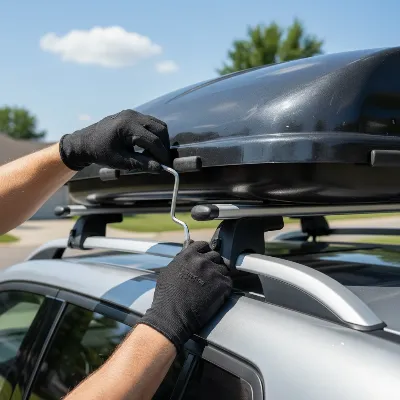 A person is carefully installing a cargo roof box onto a car's roof rack, emphasizing safety and proper fit
Essential Maintenance Tips for Your New Cargo Roof Box
Proactive maintenance is the cornerstone of extending the lifespan and ensuring the reliability of your cargo roof box. By following these essential tips, you can protect your investment and guarantee it’s always ready for your next adventure.
Cleaning and Protecting the Exterior
Keeping the exterior clean not only maintains its appearance but also prevents degradation of materials.
- Gentle Cleaning: Use a solution of mild soap (like dish soap) and warm water with a soft sponge or microfiber cloth to clean the surface. Avoid abrasive cleaners or scouring pads that can scratch the finish.
- Avoid Harsh Chemicals: Never use alcohol, acetone, or solvent-based cleaners, as these can damage the plastic’s protective coating, making it brittle and prone to fading.
- Prompt Cleaning: Wash your roof box after long trips, especially if it has accumulated dust, insect debris, or road salt, which can be corrosive.
- Thorough Drying: After cleaning, ensure the roof box is completely dry before storage or use to prevent mold, mildew, or water spots.
- UV Protection: Consider applying a UV protectant (like those for vinyl, rubber, and plastic) to safeguard against sun damage and fading.
Maintaining Locks and Hinges
These moving parts are crucial for security and functionality and require regular attention.
- Regular Inspection: Before each use, inspect all locking mechanisms for signs of wear, rust, or damage. Also check hinges and struts for smooth operation.
- Lubrication: Lubricate locks and hinges regularly to ensure smooth operation, especially in cold weather. Use silicone-based lubricant for plastic parts and white lithium grease for metal components.
- Avoid WD40: Never use WD40 on plastic components as it can degrade them over time.
- Test Operation: After lubrication, open and close the box a few times to work the lubricant into the mechanisms. Periodically operate both sides (if dual-opening) to prevent seizing.
Checking Seals and Weatherproofing
The seals are your first line of defense against moisture and dust.
- Visual Inspection: Regularly check the rubber gaskets/seals around the door edges for cracks, tears, dryness, or deformation.
- Cleaning Seals: Clean the seals with mild soap and water using a soft brush.
- Conditioning Seals: Apply a rubber conditioner or protectant (preferably with UV inhibitors) every few months to keep the rubber pliable and prevent drying out and cracking.
- Watertightness Test: If you suspect a leak, perform a simple watertightness test by closing a bright light inside the box in the dark. Any light peeking through indicates a compromised seal.
- Replacement: If seals are significantly damaged, replace them promptly to maintain waterproofing and prevent cargo damage.
Proper Storage During Off-Season
How you store your roof box when not in use significantly impacts its longevity.
- Remove When Not Needed: If you don’t plan to use your roof box for a while, remove it from your vehicle to prevent unnecessary exposure to elements and reduce fuel consumption.
- Store Horizontally: Always store your roof box horizontally, ideally resting on its base. Storing it upright or on its side can cause warping or damage to hinges and locking mechanisms.
- Dry, Shaded Area: A garage or shed is the best storage location. Avoid direct sunlight, as UV rays can weaken plastic and cause fading. Also, avoid areas with extreme high temperatures (which can cause warping) or freezing temperatures (which can make plastic brittle).
- Clean and Dry Before Storage: Ensure the box is thoroughly cleaned and completely dry before putting it into storage.
Pre-Trip Inspections
A quick check before every journey can prevent issues on the road.
- Hardware Check: Verify that all mounting clamps, bolts, and hardware are tight and secure. Give the box a shake to ensure no movement.
- Lock Engagement: Confirm that all locks are fully engaged and keys are secured.
- Lid and Seal Check: Ensure the lid closes completely and the seals are properly compressed, forming a watertight barrier.
By incorporating these maintenance practices into your routine, you can ensure your cargo roof box remains a durable, secure, and aesthetically pleasing addition to your vehicle for many adventures ahead.
Important Considerations When Using a Roof Box
Beyond maintenance, certain operational practices are crucial for the safe and efficient use of your roof box. Adhering to these guidelines will enhance your driving experience and safeguard your belongings.
- Observe Speed Limits: Driving with a roof box, especially when fully loaded, changes your vehicle’s aerodynamics and center of gravity. While modern boxes are designed to be aerodynamic, always adhere to recommended speed limits when driving with a roof box, as excessive speed can affect stability and fuel economy.
- Mind Overhead Clearance: Be acutely aware of your vehicle’s increased height. Measure your total overhead clearance with the roof box installed and it when entering garages, car washes, underground parking, drive-throughs, or passing under low bridges. Impacts can cause significant damage to the box and your vehicle.
- Avoid Automatic Car Washes: The powerful brushes and high-pressure jets in automatic car washes can damage your roof box, its mounting system, and potentially compromise its seals. It is always recommended to remove the roof box or use a hand wash facility when cleaning your vehicle.
- Regular Security Checks: Even during a journey, take breaks to periodically check that the roof box remains securely attached to your roof bars and that all locks are still engaged. Road vibrations and changing conditions can sometimes affect the tightness of fittings.
> “Proper care and mindful usage of your roof box are not just about aesthetics; they are fundamental for ensuring safety on the road and protecting your valuable gear.” – Admin, Reviewutible.com
Conclusion
A cargo roof box is an indispensable accessory for adventurers and families alike, providing essential extra storage and enhancing your travel experiences. However, its continued performance and reliability are directly linked to the care you provide. By consistently applying these essential maintenance tips—from regular cleaning and meticulous inspection of locks and seals to proper storage and mindful usage—you can significantly extend its lifespan and preserve its functionality.
Investing a small amount of time in maintenance can prevent costly repairs, protect your valuable cargo, and ensure your roof box is always ready for your next journey, no matter the destination. a well-maintained roof box is a safe and dependable roof box. How will you make roof box maintenance a seamless part of your travel preparations?
Frequently Asked Questions
How often should I clean my roof box?
It’s advisable to clean your roof box after every long trip, especially if it accumulates dirt, insects, or road salt. A thorough cleaning and inspection every three months, or more frequently with heavy use, will help maintain its condition and identify any potential issues early.
Can I use a pressure washer on my roof box?
It is not recommended to use a high-pressure washer on your roof box. The strong jets can damage seals, compromise waterproofing, and potentially loosen mounting hardware. Stick to mild soap, warm water, and a soft cloth for cleaning.
What should I do if my roof box lock is stiff or sticky?
If your roof box lock feels stiff, apply a small amount of silicone-based lubricant into the keyhole and work the key a few times. For metal components, white lithium grease can be effective. Avoid WD40 on plastic parts, as it can be detrimental.
How can I prevent my roof box from leaking?
To prevent leaks, regularly inspect the rubber seals around the lid for any cracks, tears, or dryness. Clean the seals with mild soap and water, and apply a rubber conditioner every few months to keep them pliable. Replace damaged seals promptly to maintain a watertight barrier.
Is it okay to leave my roof box on my car year-round?
While physically possible, it’s generally recommended to remove your roof box when not in use, especially for extended periods. This reduces wear and tear from constant exposure to weather, minimizes potential impacts on fuel economy, and frees up your vehicle’s roof for other purposes.
