Driving through an automatic car wash with a roof box is generally not recommended due to significant risks of damage to the roof box, your vehicle, or the car wash equipment. Most roof box manufacturers, including brands like Thule and Yakima, explicitly advise against it, as automatic washes are not designed for the added dimensions and vulnerabilities of a roof box. The safest cleaning methods are hand washing or using self-serve wand washes, which provide manual control over the cleaning process.
What is a Roof Box and Why Do You Need One?
A roof box, often called a cargo box or rooftop carrier, is an enclosed storage container designed to attach to your vehicle’s roof rack system. Its primary purpose is to expand your car’s carrying capacity, providing a secure and weatherproof space for luggage, sports equipment, camping gear, or any bulky items that won’t fit inside your vehicle.
Roof boxes are invaluable for various situations. During family vacations, they free up cabin space, allowing passengers more comfort. For outdoor enthusiasts, they securely transport skis, snowboards, surfboards, or camping equipment, keeping dirty or wet gear out of the car’s interior. They are also incredibly beneficial for everyday needs, like moving house items or simply decluttering your vehicle for a road trip. The main benefits include significantly increased storage, protection for your belongings from weather and theft, and enhanced convenience for loading and unloading compared to cramming items into the back seat or trunk. For explore our automotive roof reviews on this site.
Types of Roof Boxes on the Market
Understanding the variety of roof boxes available can help you appreciate their design considerations, even when it comes to mundane tasks like washing. Roof boxes differ primarily in material, size, and design, each influencing their durability, weight, and ease of use.
Roof Box by Material
The material of your roof box largely dictates its resilience and weight. Most roof boxes are constructed from durable plastics, but variations exist:
- ABS Plastic: This is the most common material due to its excellent balance of strength, flexibility, and impact resistance. ABS plastic boxes are relatively lightweight and can withstand various weather conditions, making them a popular choice for many users. Their main drawback can be a susceptibility to UV degradation over long periods if not properly cared for.
- Fiberglass: Offering superior rigidity and aerodynamics, fiberglass boxes are often found in premium models. They are generally more robust and resistant to impact, though they can be heavier and typically come at a higher price point. Their smooth finish also lends itself to more aerodynamic designs.
- Metal (Aluminum): While less common for the entire box, some roof boxes incorporate aluminum elements for added strength, especially in their base or mounting mechanisms. Full metal boxes are rare due to weight and cost, but they offer exceptional durability and security.
Comparing these, ABS offers a good all-rounder, fiberglass provides enhanced performance and aesthetics, and metal focuses on maximum strength.
Roof Box by Size and Capacity
|
Our Picks for the Best Roof Box in 2026
As an Amazon Associate I earn from qualifying purchases.
|
||
| Num | Product | Action |
|---|---|---|
| 1 | iBirdie Roof Rack Cargo Carrier 15.3 Cubic Feet, Soft-Shell Rooftop Cargo Box, Waterproof Heavy Duty 1200D for Car with/Without Roof Rack, Includes Anti-Slip Mat, Door Hooks, 46x34x17 inches |

|
| 2 | MeeFar Roof Rack Carrier Basket Universal Rooftop 51" X 36" X 5" + Waterproof Bag 15 Cubic Feet (44" 34" 17"), and Cargo Net with Attachment Hooks, Ratchet Straps |
|
| 3 | Sailnovo Rooftop Cargo Carrier Roof Bag, 20 Cubic feet Waterproof Roof Cargo Carrier fit car with/Without Luggage Rack - Vehicle Soft Shell Roof Cargo Box with Tie-Down Strap, Safety Hook |
|
| 4 | iBirdie Roof Rack Cargo Carrier 32.1 Cubic Feet, XXL Soft-Shell Rooftop Cargo Box, Waterproof Heavy Duty 1200D for Car with/Without Roof Rack, Includes Anti-Slip Mat, Door Hooks, 60x37x25 inches |
|
| 5 | Car Rooftop Cargo Carrier Bag, 21 Cubic Feet 100% Waterproof Heavy Duty 840D Car Roof Bag for All Vehicle with/Without Racks - Anti-Slip Mat, 6 Door Hooks, Storage Bags, 2 Extra Straps, Luggage Lock |
|
| 6 | GarveeLife 46" x 36" Universal Roof Rack Cargo Carrier Basket, 200 Lbs Capacity Rooftop Cargo Rack, Car Top Luggage Holder Basket Heavy Duty for SUVs, Trucks, Vehicles |
|
| 7 | Asinking Car Rooftop Cargo Carrier Bag - 100% Waterproof Heavy Duty Car Roof Luggage Carrier 21 Cubic Feet, Fits All Vehicles with/Without Roof Rack - Easy Install & Triply Reinforced for Secure Use |
|
| 8 | MIDABAO 20 Cubic Waterproof Duty Car Roof Top Carrier-Car Cargo Roof Top Bag, Waterproof & Coated Zippers includes Anti Slip Mat with or without Racks (20 Cubic Feet) |
|
| 9 | FIVKLEMNZ 21 Cubic Car Rooftop Cargo Carrier Roof Bag Waterproof for All Top of Vehicle with/Without Rack Includes Topper Anti-Slip Mat + Reinforced Straps + 6 Door Hooks + Luggage Lock |
|
| 10 | Pelican Cargo Cases |
|
Roof boxes come in a range of sizes and capacities, designed to fit different vehicles and accommodate diverse storage needs. Selecting the right size is crucial for both functionality and maintaining vehicle aesthetics.
- Small (100-300 liters): Ideal for smaller cars or those needing extra space for a few duffel bags or a couple of pairs of skis. They are compact and minimize aerodynamic impact.
- Medium (300-500 liters): A versatile choice for most families and SUVs, suitable for camping gear, multiple suitcases, or several sets of skis/snowboards. This is often the most popular size category.
- Large (>500 liters): Designed for larger vehicles and extensive travel, accommodating bulky items like strollers, large tents, or multiple oversized bags. These offer maximum storage but require careful consideration of vehicle length and height restrictions.
The right capacity depends on what you typically carry and how often. Always ensure the box length doesn’t impede your vehicle’s trunk access and that its width doesn’t interfere with other roof-mounted accessories.
Roof Box by Style and Design
Modern roof boxes are engineered with more than just storage in mind; their style and design contribute significantly to driving dynamics and user convenience.
Aerodynamic designs are a key feature, often achieved through sleek, tapered shapes that reduce drag, minimizing wind noise and improving fuel efficiency. Many boxes also feature a low-profile fit to maintain the vehicle’s aesthetic.
Beyond looks, functionality is paramount. Features like dual-side opening provide easy access from either side of the vehicle, while quick-mount systems allow for tool-free installation and removal in minutes. Secure locking mechanisms, often multi-point, ensure your cargo is protected from theft and remains safely enclosed during transit. Some advanced models even include internal tie-down points or integrated lighting for added convenience.
Can You Drive Through a Car Wash with a Roof Box On? The Definitive Answer
The short answer is it is generally not recommended to drive through an automatic car wash with a roof box mounted on your vehicle. While it might seem convenient, the risks involved often outweigh the benefits, potentially leading to costly damage to your roof box, your vehicle, or even the car wash equipment. Most roof box manufacturers explicitly advise against it.
Car washes are designed for the standard contours of a vehicle, not for the added dimensions and vulnerabilities of a roof box. The forces applied in an automatic wash, whether from spinning brushes or high-pressure water jets, are significant and can interact with your roof box in unpredictable ways. This can result in structural damage to the box, loosened mounting hardware, water leakage into the box, and even scratches or dents to your car’s paintwork.
Many automatic car wash facilities prominently display disclaimers stating they are not liable for damage to aftermarket accessories like roof boxes. This means any damage incurred will likely be your financial responsibility. In some unfortunate cases, a damaged roof box can also cause damage to the car wash machinery, potentially leading to you being charged for repairs.
Types of Car Washes: Which Ones to Avoid and Why
Not all car washes are created equal, especially when it comes to accommodating accessories like roof boxes. Understanding the differences is crucial for making a safe choice.
Automatic Friction/Brush Car Washes
Automatic friction, or brush car washes, are the most common type, utilizing spinning brushes or fabric strips to scrub your vehicle clean. These types of car washes should be avoided entirely if you have a roof box installed.
The main reason for this strong recommendation is the high risk of mechanical damage. The aggressive spinning brushes or heavy fabric strips can easily snag on the edges, latches, or mounting points of your roof box. This can twist or dislodge the box, rip off components, or even tear the box completely from your roof. Such an incident could not only destroy your expensive roof box but also severely damage your vehicle’s roof, paintwork, and the car wash machinery. The abrasive action of the brushes can also cause significant scratches or scuffs to the roof box’s surface, affecting its appearance and potentially compromising its integrity over time.
Touchless Car Washes
Touchless car washes, which use high-pressure water jets and cleaning chemicals instead of physical brushes, are generally considered a safer alternative compared to brush washes, but they are not without risks. While they eliminate the risk of snagging and abrasive damage from brushes, the intense water pressure introduces other potential problems.
High-pressure water can work its way into seals, causing water to leak inside your roof box and potentially damage any contents. The sheer force of the water jets can also loosen mounting bolts or other components over time, compromising the security of your roof box. The strong chemical detergents used in some touchless washes, if not rinsed properly, can be harsh on plastic and metal components, potentially leading to corrosion or discoloration. While touchless car washes minimize direct physical contact, it’s still essential to exercise caution and inspect your roof box thoroughly before and after use.
Hand Washing and Self-Serve Bays
For vehicles equipped with a roof box, hand washing or utilizing self-serve bays are by far the safest and most recommended options.
Hand washing at home or a dedicated detailing center provides complete control over the cleaning process. You can carefully clean around all parts of your roof box and rack, ensuring that no delicate components are damaged and all areas are thoroughly cleaned, including those hard-to-reach spots under the box that automatic washes might miss. This method allows for a gentle yet effective clean, minimizing any risk to the box’s integrity or your vehicle’s finish.
Self-serve bays, also known as wand washes, offer a good balance of convenience and safety. You control the spray wand, allowing you to manually clean your vehicle and roof box with appropriate water pressure and distance. This significantly reduces the risk of accidental damage from automated machinery while still providing a relatively quick clean. Always to use gentle pressure around seals and moving parts.
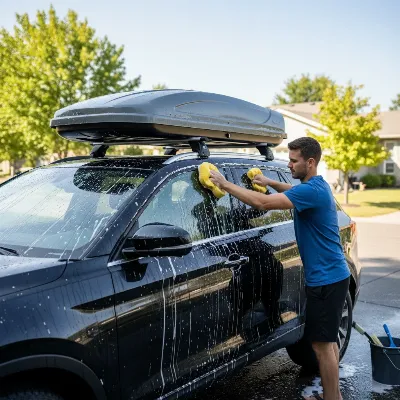 Man hand-washing a car with a roof box, demonstrating safe cleaning practices
Manufacturer Recommendations and Warranty Implications
When it comes to roof boxes and car washes, manufacturer advice is overwhelmingly clear: most, if not all, roof box manufacturers explicitly recommend removing your rooftop cargo box before entering an automatic car wash. Brands like Thule and Yakima are known to advise against automatic washes.
This recommendation isn’t just a suggestion; it’s a critical piece of advice aimed at preventing damage and ensuring the longevity of their products. Roof boxes are designed to withstand various elements and driving conditions, but they are not engineered to endure the specific mechanical stresses or high-pressure impacts of automated car wash systems.
Ignoring these manufacturer guidelines can have significant consequences, particularly concerning your product warranty. Should your roof box sustain damage in an automatic car wash, the manufacturer may deem the damage to be a result of improper use or negligence. In such cases, your warranty could be voided, leaving you responsible for the full cost of repairs or replacement. Always consult your specific roof box’s owner’s manual for detailed instructions and warnings, as this information is crucial for maintaining your warranty and ensuring safe operation.
Essential Precautions If You Choose a Touchless Car Wash
While generally not recommended, if you absolutely must use a touchless car wash with your roof box, taking meticulous precautions is paramount to minimize risks. The convenience of a touchless wash often tempts drivers, but it’s essential to understand that “safer” does not mean “risk-free”.
Pre-Wash Inspection: Clearance and Security
Before even approaching the entrance of a touchless car wash, a thorough pre-wash inspection is critical. Begin by checking the car wash’s posted height clearance and comparing it to your vehicle’s total height with the roof box installed. Roof boxes significantly add to your vehicle’s height, and exceeding the limit can lead to severe structural damage.
Next, meticulously inspect your roof box and its mounting system. Ensure all bolts, clamps, and fasteners are securely tightened. Check for any signs of looseness, cracks in plastic components, or worn rubber seals. Even minor imperfections can be exacerbated by high-pressure water, potentially leading to detachment or water ingress. “Always remove cargo boxes before automatic washes. Their removable design makes this the safest approach, protecting both the box and your vehicle’s finish from potential damage.”
Removing All Accessories
This is arguably the most crucial precaution: always remove all detachable accessories from your roof rack system before entering any automatic car wash, including touchless ones. This includes the roof box itself, as well as bike carriers, kayak holders, ski racks, or any other items that attach to your bare crossbars.
While touchless washes don’t use brushes, the intense jets of water can still dislodge or damage these accessories, turning them into potential projectiles or causing them to snag on other parts of the wash system. Removing them eliminates potential points of failure and significantly reduces the risk of damage to your gear, your car, and the car wash itself.
Post-Wash Inspection
After exiting the touchless car wash, do not drive away immediately. Take a few moments to conduct another thorough inspection of your roof box and its mounting system. Check for any new signs of looseness in the fasteners, any unexpected water ingress into the box, or any visible damage to the box’s surface or seals. Pay close attention to the areas where the roof box attaches to the crossbars, as these are vulnerable to the forces of high-pressure water. Early detection of any issues can prevent more significant problems down the road. If you notice any damage or looseness, address it immediately.
The Safest Ways to Clean Your Car with a Roof Box
Given the risks associated with automatic car washes, the safest and most recommended methods for cleaning a vehicle with a roof box involve a more hands-on approach. These methods ensure thorough cleaning without compromising the integrity of your roof box or vehicle.
Hand Washing
Hand washing your car is the ultimate safe option when a roof box is installed. It allows you to meticulously clean every part of your vehicle and roof box without exposing them to the harsh, unpredictable forces of automated systems.
- Gather Supplies: You’ll need two buckets (one for soapy water, one for rinsing your mitt), a soft wash mitt or sponge, car-specific soap, a hose with a spray nozzle, and soft microfiber drying towels.
- Pre-Rinse: Thoroughly rinse your entire vehicle, including the roof box, to remove loose dirt and debris. This helps prevent scratches during the washing phase.
- Wash Gently: Starting from the top down, apply soapy water with your wash mitt. Pay special attention to the roof box, carefully cleaning around its latches, hinges, and mounting points. Use gentle, linear motions.
- Rinse Frequently: Rinse your wash mitt in the clean water bucket regularly to avoid transferring dirt back to your car.
- Final Rinse: Once soaped, rinse the entire vehicle and roof box thoroughly with clean water, ensuring no soap residue is left behind.
- Dry: Immediately dry the car and roof box with clean microfiber towels to prevent water spots. This is also an excellent opportunity for a final inspection.
Hand washing ensures a deep clean and allows for a visual inspection of your roof box’s condition.
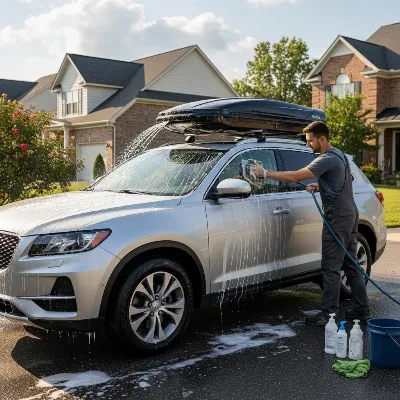 A car with a roof box is being hand-washed in a driveway on a sunny day.
Using Self-Serve Wand Washes
Self-serve wand washes provide a good compromise between convenience and safety. These bays give you manual control over the washing equipment, making them a much better choice than automatic options for vehicles with roof boxes.
- Position Your Vehicle: Drive your car into the bay and ensure it’s centered.
- Select Options Carefully: Choose the pre-soak or soap function.
- Maintain Distance: When using the high-pressure wand, keep a safe distance (at least 1-2 feet) from your roof box, especially around seams, latches, and seals. While you have control, excessive direct pressure can still force water past seals or loosen components.
- Gentle Cleaning for Roof Box: Apply soap and rinse to the roof box with less intensity than you might use on the rest of the car. Consider using a soft-bristle brush if available at the bay, or bring your own, for gentle scrubbing.
- Thorough Rinse: Ensure all soap is completely rinsed off the roof box and the entire vehicle to prevent streaking or residue.
- Final Dry: If possible, air dry or use your own clean microfiber towels to prevent water spots and check for any issues.
This method allows for targeted cleaning and reduces the risk associated with automated systems, giving you peace of mind.
Conclusion
Deciding whether to take your car through a car wash with a roof box on is a nuanced decision, but the overwhelming consensus leans towards caution. While the convenience of automatic washes is tempting, the potential for damage to your expensive roof box, your vehicle, and even the car wash machinery itself is a significant risk that most manufacturers and experts advise against. Brush or friction washes should be avoided at all costs due to the high likelihood of snagging and mechanical stress. Touchless washes, though seemingly safer, still pose risks from intense water pressure and chemical exposure that can loosen components or compromise seals.
For the ultimate protection and a truly thorough clean, hand washing or utilizing self-serve wand washes are the unequivocally safest methods. These options give you the control needed to clean carefully around the delicate components of your roof box, ensuring its longevity and maintaining your vehicle’s appearance. Always prioritize a quick inspection of your roof box’s security before and after any wash. After all, isn’t preserving your gear and vehicle worth a little extra effort?
Frequently Asked Questions
Can high-pressure water damage a roof box in a touchless car wash?
Yes, even in touchless car washes, high-pressure water jets can cause damage to a roof box. The intense pressure can force water past seals, leading to leaks, or gradually loosen mounting bolts and other components over time, compromising the box’s security. It’s advisable to maintain a safe distance with the spray and inspect your roof box after the wash.
Will a car wash void my roof box warranty if it gets damaged?
Many roof box manufacturers explicitly advise against using automatic car washes. If your roof box is damaged in a car wash, the manufacturer may consider it improper use, potentially voiding your warranty and leaving you responsible for repair or replacement costs. Always check your specific product’s warranty terms.
Frequently Asked Questions
Is it safe to take a car with a roof box through an automatic car wash?
No, it is generally not safe to take a car with a roof box through an automatic car wash. Manufacturers like Thule and Yakima advise against it due to the high risk of mechanical damage from spinning brushes or high-pressure water jets, which can damage the box, your vehicle, or the car wash equipment.
What types of car washes should be avoided with a roof box?
Automatic friction or brush car washes should be entirely avoided with a roof box. The aggressive brushes can snag on the box, causing severe damage or even dislodging it. While touchless washes are a safer alternative, they still pose risks from high-pressure water and strong chemicals.
What are the safest ways to clean a car that has a roof box installed?
The safest ways to clean a car with a roof box are hand washing or using self-serve wand washes. These methods provide complete control over the cleaning process, allowing you to gently clean around all components and minimize the risk of damage to the roof box or vehicle.
Can high-pressure water damage a roof box in a touchless car wash?
Yes, even in touchless car washes, high-pressure water jets can cause damage to a roof box. The intense pressure can force water past seals, leading to leaks, or gradually loosen mounting bolts and other components over time, compromising the box's security. It's advisable to maintain a safe distance with the spray and inspect your roof box after the wash.
Will a car wash void my roof box warranty if it gets damaged?
Many roof box manufacturers explicitly advise against using automatic car washes. If your roof box is damaged in a car wash, the manufacturer may consider it improper use, potentially voiding your warranty and leaving you responsible for repair or replacement costs. Always check your specific product's warranty terms.
How to Hand Wash Your Car with a Roof Box
Hand washing is the safest method to clean your car and roof box, ensuring thorough cleaning without damage.
Collect two buckets (one for soapy water, one for rinsing), a soft wash mitt, car soap, a hose, and microfiber towels. Thoroughly rinse your entire vehicle and roof box to remove loose dirt and debris, preventing scratches during washing.
Starting from the top, apply soapy water with your wash mitt, paying special attention to the roof box's latches and mounting points using gentle, linear motions. Rinse your wash mitt regularly in the clean water bucket to avoid transferring dirt back to the car.
Once soaped, rinse the entire vehicle and roof box thoroughly with clean water to remove all soap residue. Immediately dry the car and roof box with clean microfiber towels to prevent water spots and conduct a final inspection for any issues.
Get our weekly buyer guide
Practical specs, not advice. Unsubscribe anytime.

I’ve always been nervous about cleaning my Thule roof box after road trips, especially with all the bugs. This was super helpful! I used to just hose it down, but the hand washing method with a soft sponge really made a difference. It looks brand new again without any streaks.
This confirmed my suspicions about automatic car washes. I’ve always avoided them with my cargo box on, just felt too risky. The tips for hand washing were practical, especially for getting into the nooks and crannies. It’s a bit more work, but worth it to protect my gear and the box itself.
Good info, but I wish there was more detail on specific cleaning products. I tried the self-serve wand wash, and while it got most of the grime off my Yakima box, I still had to scrub a bit by hand for the tougher spots. It’s definitely better than an automatic wash, though, which I learned the hard way once.
Fantastic advice! I just got a roof box for camping gear and was wondering about cleaning. The explanation about why automatic washes are a no-go for the added dimensions makes perfect sense. I’ll stick to hand washing from now on to keep my new carrier in top shape.