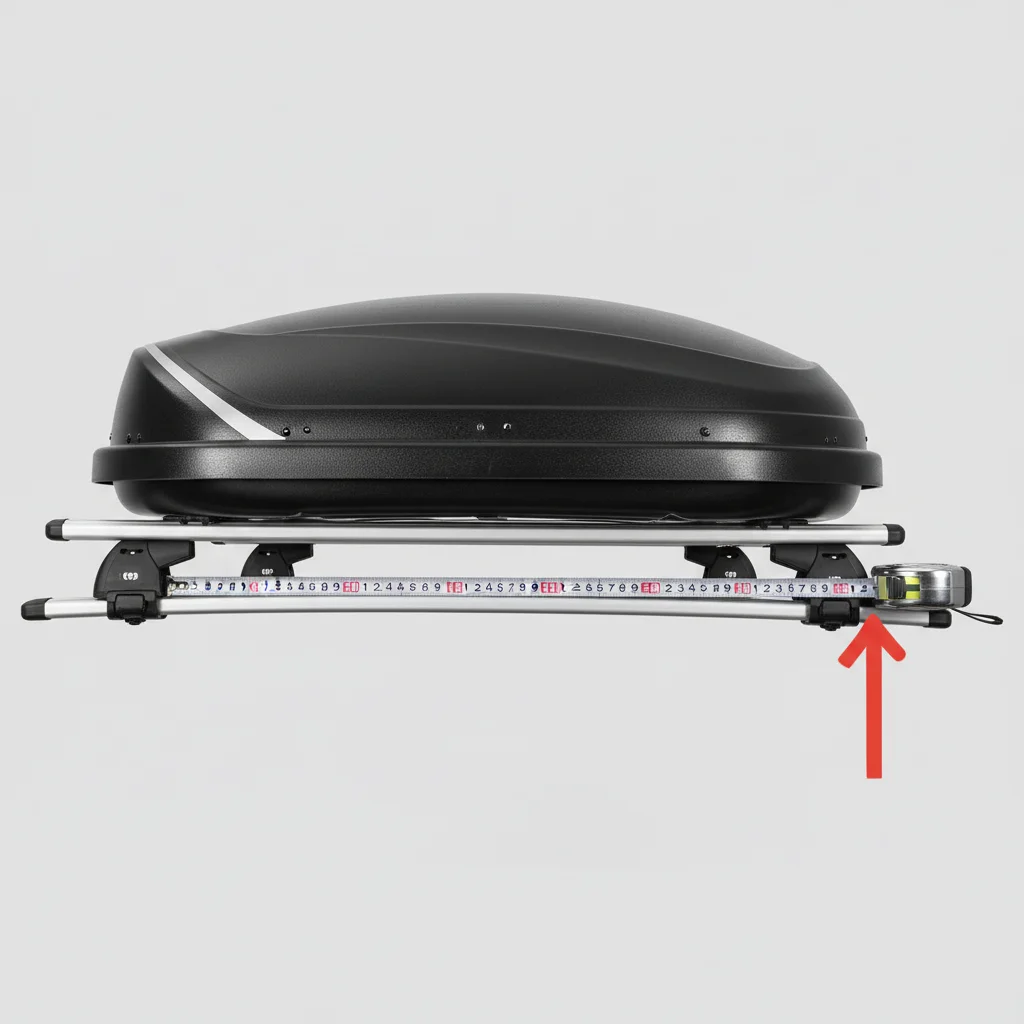
The ideal roof box crossbar spacing is typically between 20 to 30 inches (50 to 76 cm) for most standard roof boxes. This range provides optimal support and stability, ensuring your cargo carrier is securely mounted to your vehicle’s roof rack. While many roof boxes offer some adjustability, adhering to the manufacturer’s recommended spacing is crucial for safety and performance.
Understanding Your Roof Box and Vehicle Requirements
Before adjusting your crossbars, it’s essential to consult both your roof box and vehicle owner’s manuals. Each roof box has specific mounting points or channels designed to accommodate a certain range of crossbar distances. Exceeding or falling short of these recommendations can compromise the box’s integrity and attachment security. Similarly, your vehicle’s roof rack system, whether factory-installed or aftermarket, will have its own guidelines for crossbar placement to ensure proper load distribution and prevent damage to the roof. For more automotive roof guides on this site.
Factors like the length of your roof box and the type of mounting hardware play a significant role. Longer roof boxes often require a wider spacing to prevent sagging or excessive vibration, especially at higher speeds. Shorter boxes, conversely, might need a more compact spacing. Always prioritize the manufacturer’s specifications to avoid potential issues during transit.
How to Measure and Adjust Crossbar Spacing
Measuring your crossbar spacing is straightforward. Use a tape measure to determine the distance between the center of your front crossbar and the center of your rear crossbar. Ensure your vehicle is on a level surface for accurate measurement. If adjustments are needed, most aftermarket crossbars allow for easy repositioning along the side rails. For factory-installed crossbars, you might need specific tools or follow a particular procedure outlined in your vehicle’s manual.
When adjusting, aim for a symmetrical setup. Uneven spacing can lead to an unbalanced load, increasing wind noise and potentially affecting your vehicle’s handling. After making adjustments, always double-check the tightness of all mounting hardware to prevent any movement during your journey. A secure fit is paramount for both the safety of your cargo and other road users.
Impact of Incorrect Spacing on Performance and Safety
|
Our Picks for the Best Roof Box in 2026
As an Amazon Associate I earn from qualifying purchases.
|
||
| Num | Product | Action |
|---|---|---|
| 1 | Asinking Car Rooftop Cargo Carrier Bag - 100% Waterproof Heavy Duty Car Roof Luggage Carrier 21 Cubic Feet, Fits All Vehicles with/Without Roof Rack - Easy Install & Triply Reinforced for Secure Use |

|
| 2 | Pelican Cargo Cases |
|
| 3 | MIDABAO 20 Cubic Waterproof Duty Car Roof Top Carrier-Car Cargo Roof Top Bag, Waterproof & Coated Zippers includes Anti Slip Mat with or without Racks (20 Cubic Feet) |
|
| 4 | iBirdie Roof Rack Cargo Carrier 32.1 Cubic Feet, XXL Soft-Shell Rooftop Cargo Box, Waterproof Heavy Duty 1200D for Car with/Without Roof Rack, Includes Anti-Slip Mat, Door Hooks, 60x37x25 inches |
|
| 5 | Car Rooftop Cargo Carrier Bag, 21 Cubic Feet 100% Waterproof Heavy Duty 840D Car Roof Bag for All Vehicle with/Without Racks - Anti-Slip Mat, 6 Door Hooks, Storage Bags, 2 Extra Straps, Luggage Lock |
|
| 6 | GarveeLife 46" x 36" Universal Roof Rack Cargo Carrier Basket, 200 Lbs Capacity Rooftop Cargo Rack, Car Top Luggage Holder Basket Heavy Duty for SUVs, Trucks, Vehicles |
|
| 7 | iBirdie Roof Rack Cargo Carrier 15.3 Cubic Feet, Soft-Shell Rooftop Cargo Box, Waterproof Heavy Duty 1200D for Car with/Without Roof Rack, Includes Anti-Slip Mat, Door Hooks, 46x34x17 inches |
|
| 8 | Sailnovo Rooftop Cargo Carrier Roof Bag, 20 Cubic feet Waterproof Roof Cargo Carrier fit car with/Without Luggage Rack - Vehicle Soft Shell Roof Cargo Box with Tie-Down Strap, Safety Hook |
|
| 9 | FIVKLEMNZ 21 Cubic Car Rooftop Cargo Carrier Roof Bag Waterproof for All Top of Vehicle with/Without Rack Includes Topper Anti-Slip Mat + Reinforced Straps + 6 Door Hooks + Luggage Lock |
|
| 10 | MeeFar Roof Rack Carrier Basket Universal Rooftop 51" X 36" X 5" + Waterproof Bag 15 Cubic Feet (44" 34" 17"), and Cargo Net with Attachment Hooks, Ratchet Straps |
|
Incorrect roof box crossbar spacing can lead to several problems. If the spacing is too narrow, the roof box may not have adequate support, leading to excessive flex or even damage to the box itself. This can also put undue stress on the mounting points, increasing the risk of detachment. Conversely, if the spacing is too wide, the mounting clamps might not reach or secure properly, resulting in a loose fit and potential for the box to shift or come off.
Beyond structural integrity, improper spacing can significantly impact aerodynamics. A poorly supported roof box can vibrate more, generating increased wind noise and drag, which in turn can reduce fuel efficiency. In extreme cases, a detached or damaged roof box poses a serious safety hazard to you and others on the road. Always prioritize correct installation over convenience.
- Always consult both roof box and vehicle manuals for specific spacing recommendations.
- Measure from the center of the front crossbar to the center of the rear crossbar.
- Ensure symmetrical spacing for balanced load distribution.
- Tighten all mounting hardware securely after adjustment.
- Consider the length of your roof box when determining optimal spacing.
Common Mistakes to Avoid When Setting Up Crossbars
One common mistake is assuming all roof boxes and crossbars are universally compatible without checking specifications. Another is neglecting to re-tighten mounting hardware after the initial installation and a short drive. Vibrations and road conditions can cause bolts to loosen, so a quick check after 50-100 miles is always recommended. Over-tightening, however, can also be detrimental, potentially stripping threads or cracking plastic components.
Additionally, some users might place crossbars too far forward or backward, which can interfere with the vehicle’s sunroof operation or tailgate clearance. Always test these functions after installation to ensure full accessibility. Proper placement not only secures your roof box but also maintains the functionality of your vehicle’s other features.Investing in a quality torque wrench can help prevent both under and over-tightening, ensuring a precise and safe installation every time.
Get our weekly buyer guide
Practical specs, not advice. Unsubscribe anytime.
